
The Techno Classica Weekend Escape
.png)
Introduction
Not every road trip needs eight days and six countries. Sometimes a long weekend and a good reason is enough, and Techno Classica in Essen, the world's largest classic car event, is about as good a reason as exists. Three days, a short hop across the German border, and a route built to make the most of the roads in between.
Day 1: Warming Up for the Weekend
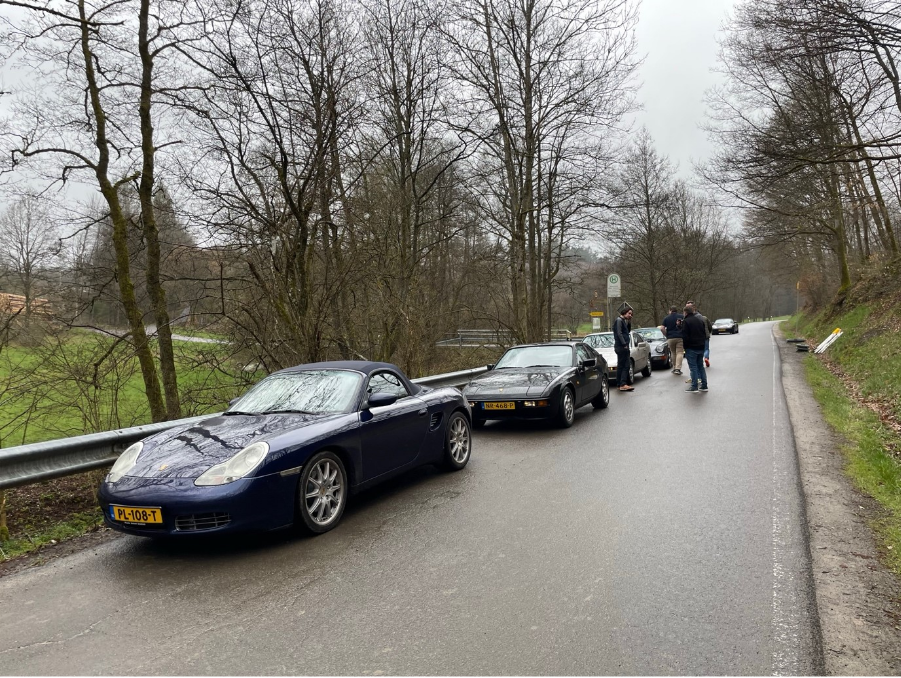
The day started on the N271, the provincial road tracing the eastern bank of the Maas through Limburg. Nothing demanding here, just flowing bends alongside the river and a chance to settle in before the border.
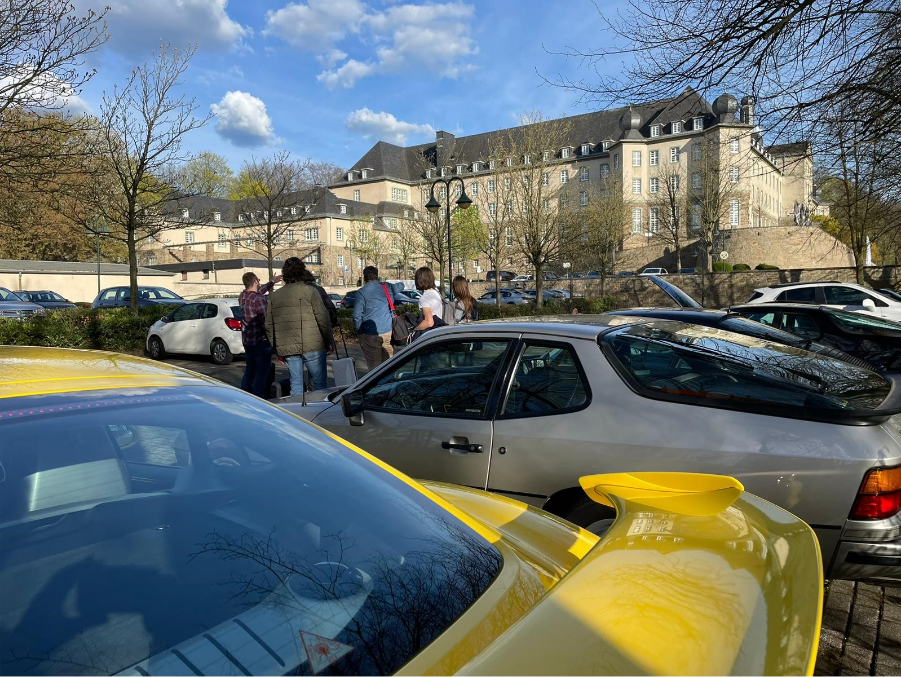
The border crossing itself was barely a formality, a quick stop in Goch just on the German side for fuel, oil, and clean windows, then onto the A40 and A3. Heading south past Oberhausen, between the Kaiserberg and Breitscheid interchanges, there's no posted limit at all, one of the genuine unrestricted stretches of Autobahn, and a proper reason to have picked this route towards Essen. Into the city we skipped the show's official parking entirely. There's a spot just two kilometres from the convention centre that we've used for years, no queues, no risk to the cars, and no chance we're printing exactly where. Some secrets stay in the tribe.
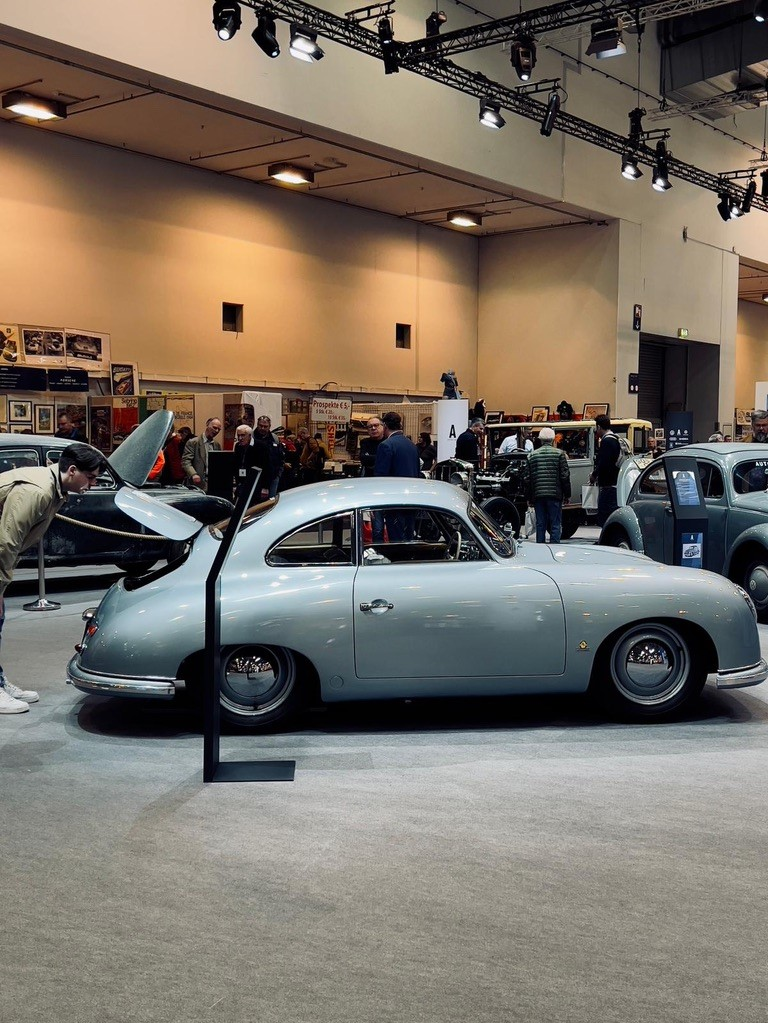
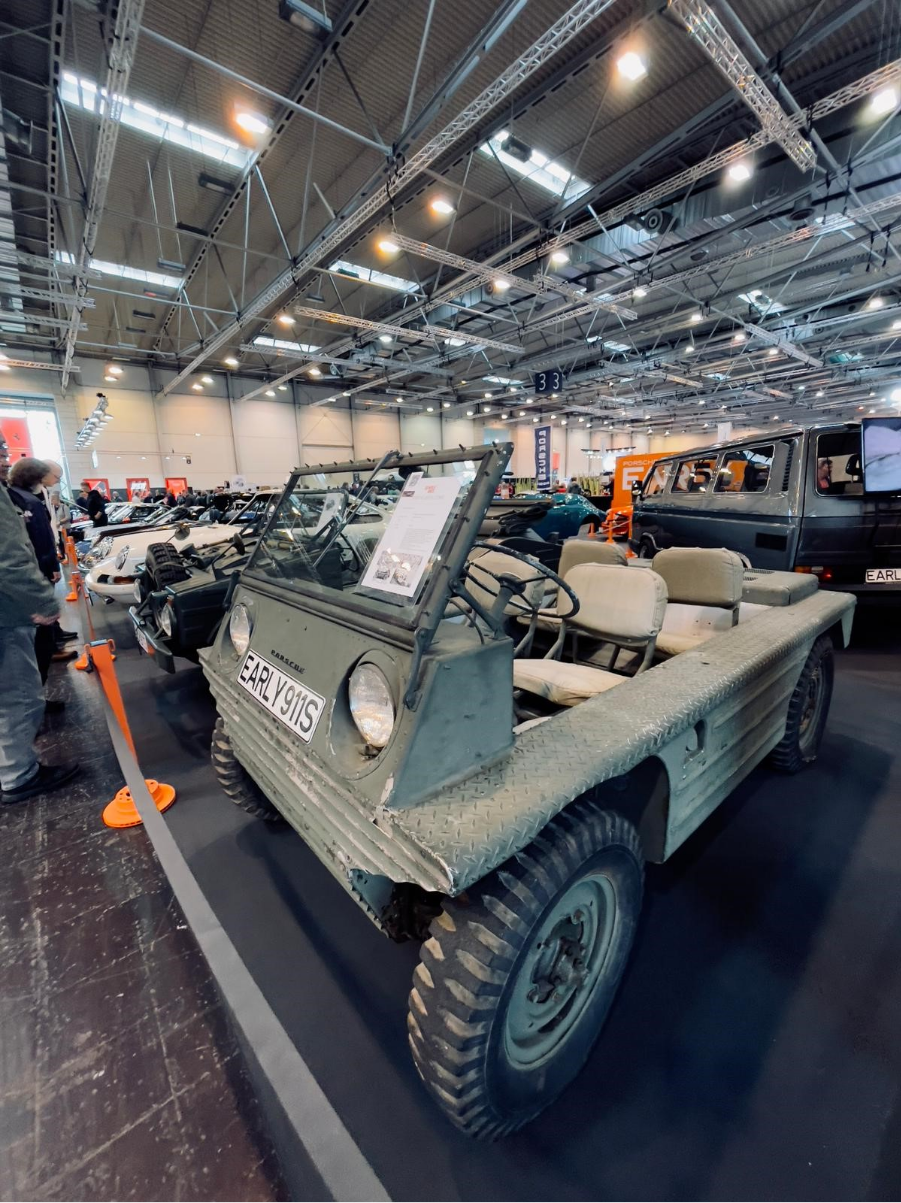
Techno Classica itself needs no introduction to anyone who cares about old cars. Running since 1989, it grew into the world's largest classic car trading event, more than 1,250 exhibitors from over 30 countries, upwards of 2,700 cars, and around 190,000 visitors through the halls each year at its peak. The 2023 edition we walked through was still recovering from Covid though, and it showed. Volkswagen, Mercedes, and Ferrari had returned to their factory stages that year, but BMW, Porsche, and Jaguar Land Rover stayed away, and the eccentric club stands that used to fill every gap between the big displays were noticeably thinner than the show's mid 2010s peak. Still worth the pilgrimage, pre-war legends, Group B monsters, and modern hypercar rarities all under one roof, just not quite the show it once was. It wouldn't get the chance to fully recover either, 2025 turned out to be the last Techno Classica ever held, with Retro Classics taking over the Essen halls from 2026.
We were through the doors right at opening and didn't leave until we were more or less pushed out at closing, nine hours inside, and it still wasn't enough. That's not an exaggeration for effect, there is genuinely that much to see.
With aching feet we walked back to the cars and picked up the route again. From Essen it ran south through Ratingen and Mettmann, climbing into the Bergisches Land through Wuppertal, Remscheid, and Solingen before dropping back down towards Bergisch Gladbach, the hills doing more for the driving than any motorway could. We finished the day at Kardinal Schulte Haus in Bensberg, on the edge of Bergisch Gladbach. The building started life in 1924 as a seminary, served as a military hospital during the Second World War, and became a conference and guest house after a fire forced a major renovation in the 1980s. From the upper floors you can see clean across to Cologne and the Rhine. The basement restaurant does an excellent Flammkuchen, best enjoyed with a cold beer while the engines cool outside.
Route facts: Limburg, Netherlands to Bensberg (Bergisch Gladbach), Germany · 183 km · Techno Classica Essen, Kardinal Schulte Haus
Day 2: Embracing Country Lanes and Forestry Roads
After a restful night, the day's focus shifted to the roads that rarely make it onto anyone's list of famous driving routes. The route itself was a genuinely tangled one, out through Overath and Engelskirchen into the Oberbergisches Land, then east into the Märkischer Sauerland around Meinerzhagen, Halver, and Kierspe, more of a scribble on the map than a straight line, and better for it.
One stretch worth calling out on its own: the B54 between Schalksmühle and Meinerzhagen, a narrow, badly cambered valley road with a reputation among local riders fierce enough that one biker guidebook compares it to the Isle of Man TT course. Further along, the high ground between Kierspe and Breckerfeld does the opposite, wide open and fast, sheep occasionally included.
The route doubled back south towards Attendorn from there, roughly two hours in, for a detour to the Attendorner Feuerwehr-Museum in the Sauerland. It's run by the local volunteer fire brigade out of their own station, and has been since 1986. Seven hundred square metres, hand pressure sprayers, wooden ladders, old engines, more than 150 helmets from around the world. Cosy, a bit homespun, nobody's idea of a headline stop, but exactly the kind of place worth pulling in for when it's already on the way.
From Attendorn the return leg swung back north through Lüdenscheid and Herscheid before dropping south again through Kierspe and Meinerzhagen towards Gummersbach, skirting the edge of the Biggesee reservoir on the way, one of the region's biggest lakes and a proper local landmark for anyone doing this loop.
We finished the day at Hotel Stremme in the Becke district of Gummersbach, a proper family run country hotel in the middle of the Bergisches Land. The kitchen's the real draw, generous, crispy schnitzels that hit exactly right after a day carving through the countryside.
Route facts: Bensberg, Germany to Gummersbach, Germany · 329 km · Attendorner Feuerwehr-Museum, Bergisches Land, Hotel Stremme
Day 3: A Fitting Finale on Twisting Backroads
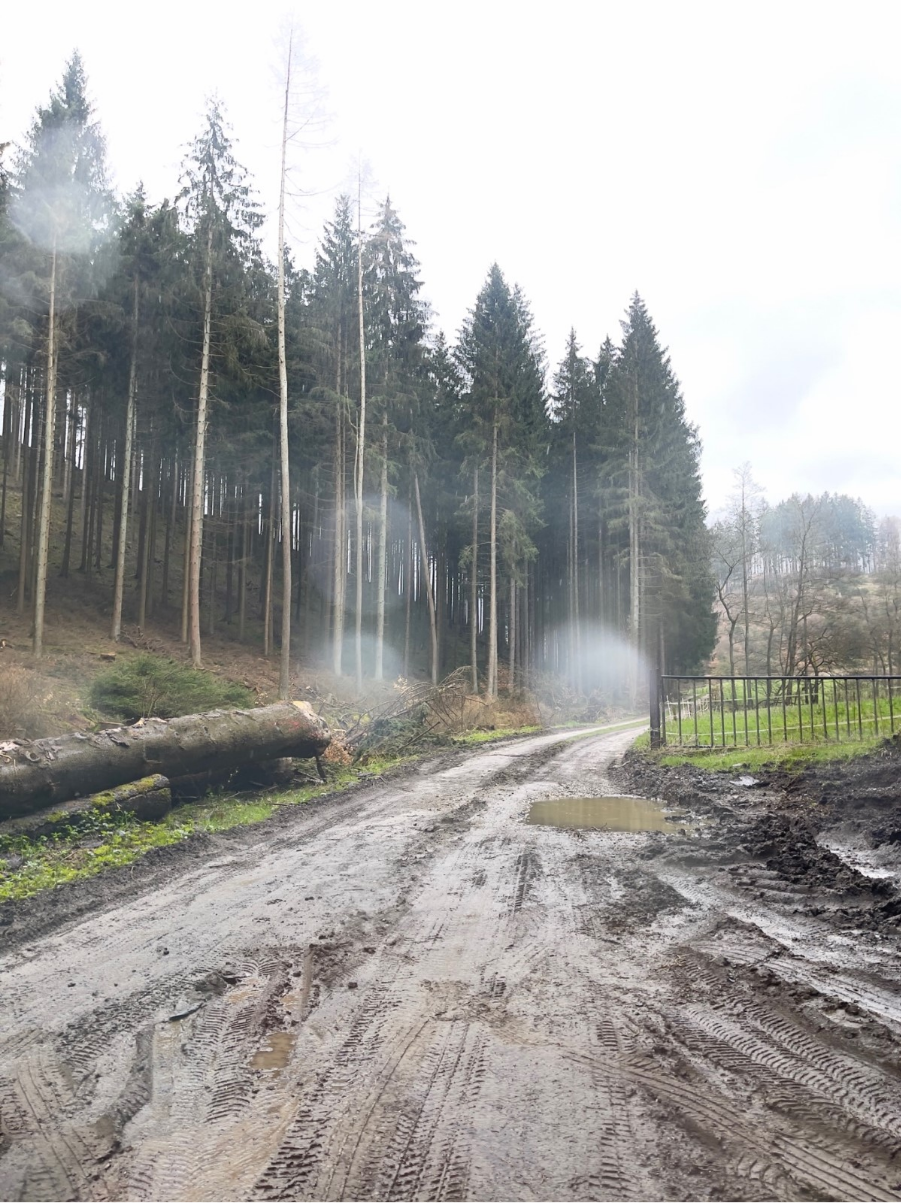
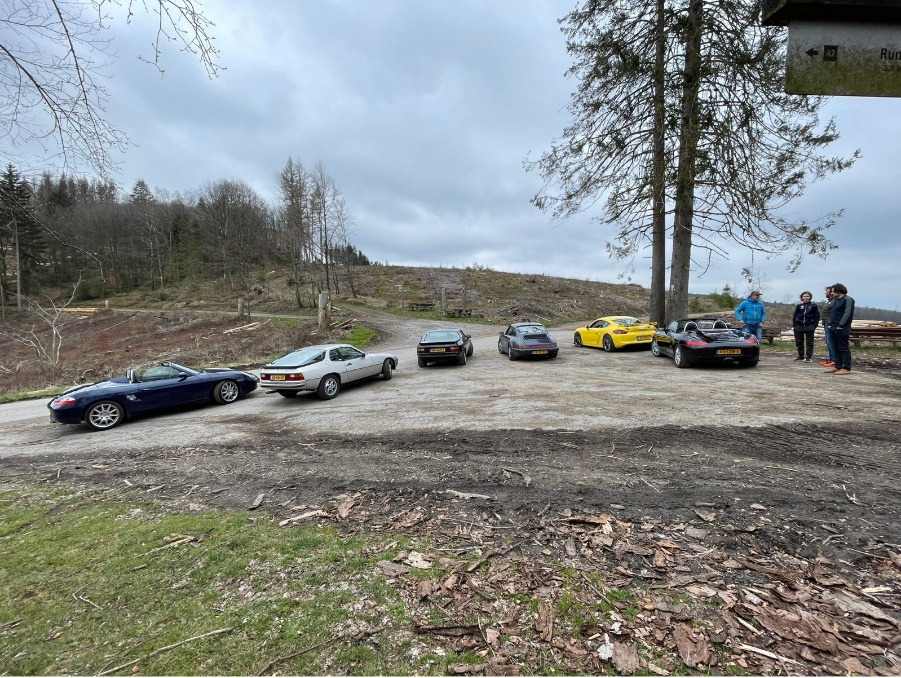
Setting off from Hotel Stremme, the final day started gently, a mix of open country roads and narrow forest tracks through the Bergisches Land, small L-roads threading dense woodland, half timbered villages marking the way.
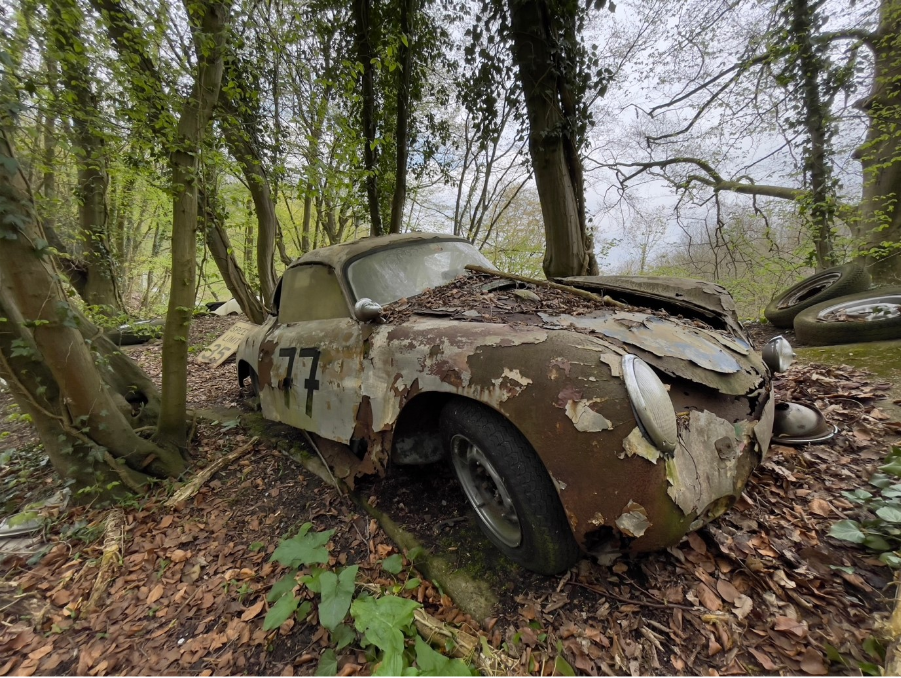
The stop for the day was the Auto-Skulpturen-Park in the Neandertal, a genuinely strange piece of automotive art. Car dealer Michael Fröhlich started it in 1984 and spent the next sixteen years adding to it.Every one of them has just been left to the weather since, on purpose, as art rather than neglect, some of them rotting away for close to forty years by now. A Citroën Traction Avant once owned by a French police chief, a Rolls-Royce, a piece of the Berlin Wall, a light aircraft hanging in the trees, rust and moss slowly consuming the cars in a surprisingly beautiful way. It sits directly across from the Neanderthal Museum, though genuinely easy to walk right past, tucked into the woods with nothing much to announce it from the road.
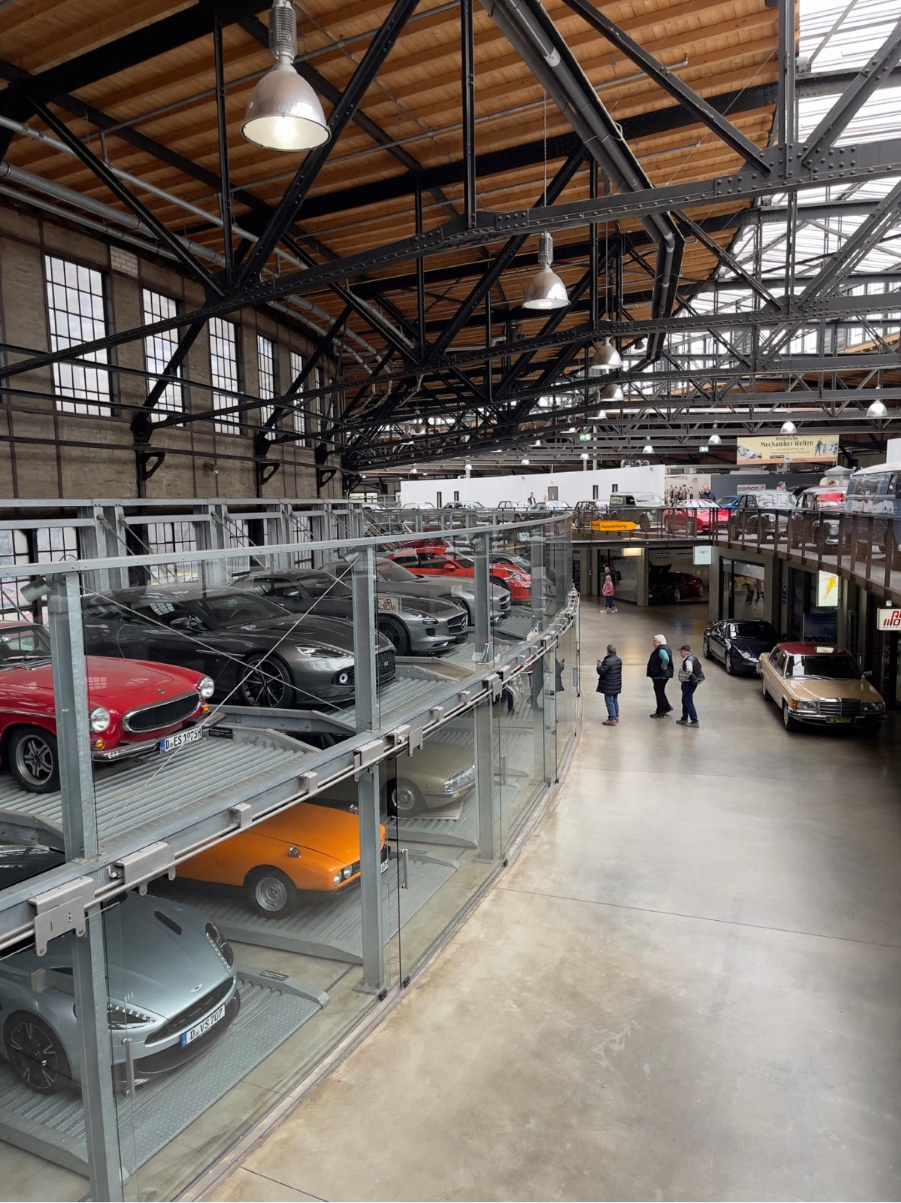
From the Neandertal a short detour south took us into Düsseldorf itself for the trip's final stop, the Classic Remise Düsseldorf, a locomotive roundhouse built between 1929 and 1931, left derelict after steam gave way to diesel, and reborn in 2006 as one of Europe's great classic car centres. Close to 300 cars across 19,000 square metres, 80 glass fronted boxes, 35 specialist workshops and dealers. Less a museum, more a working garage you happen to be allowed to walk through.
We took our time there before getting back on the road. From there it was the A52 the rest of the way, west through Neuss and Mönchengladbach towards the Dutch border, open Lower Rhine farmland flashing by at Autobahn pace, a fast, easy close to the trip after two days of tighter Bergisches Land bends.
From there it was fuel in Nettetal, a Burger King in Venlo, and the run home. Three days, a short hop across the border, and a weekend built equally around driving the cars and staring at everyone else's. The trip was over. But the roads never really end.
Route facts: Gummersbach, Germany to Auto-Skulpturen-Park and Classic Remise Düsseldorf, Germany, then home · 209+ km recorded (final stretch home not fully logged) · Auto-Skulpturen-Park, Classic Remise Düsseldorf