
Epic Roadtrip 2024 – The French Connection
.png)
Introduction
For years our compass only ever seemed to point south east. Italy, Switzerland, Germany, Austria, the usual suspects, the roads we knew and trusted. France barely featured, an odd blind spot for a group so obsessed with driving roads. One of us knew better. He had driven there often enough on his own holidays to know what the rest of us were missing, and he has never been one for tact. "You lot have no idea what a good road is until you've driven France," he said, or words close enough to it.
Adventurous as we are, we said why not. That first foray into France in 2022 turned out to be one of the best decisions we never planned for. Some roads stay with you long after the engine cools, and France had done exactly that. The mountain passes, the endless sweepers through rolling countryside, the kind of tarmac that begs for another gear, another curve, another hour behind the wheel. We had tasted it, and it had left us wanting more.
This time we made it a mission: no motorways. None. Just the purest driving roads we could find, stitched together into a route where every kilometre mattered. No straight line efficiency, no rush to the destination, only the joy of the journey.
Day 1: Ardennes to Alsace
We arrived the evening before, each of us making our own way from home to Vichter Landhaus, a family run country house hotel tucked into the Vichtbach Valley between the villages of Vicht and Zweifall, at the gates of Aachen. Its restaurant has been feeding travellers since 1991, well regarded on both sides of the German and Belgian border. A fitting, quiet place to gather before eight days of driving.
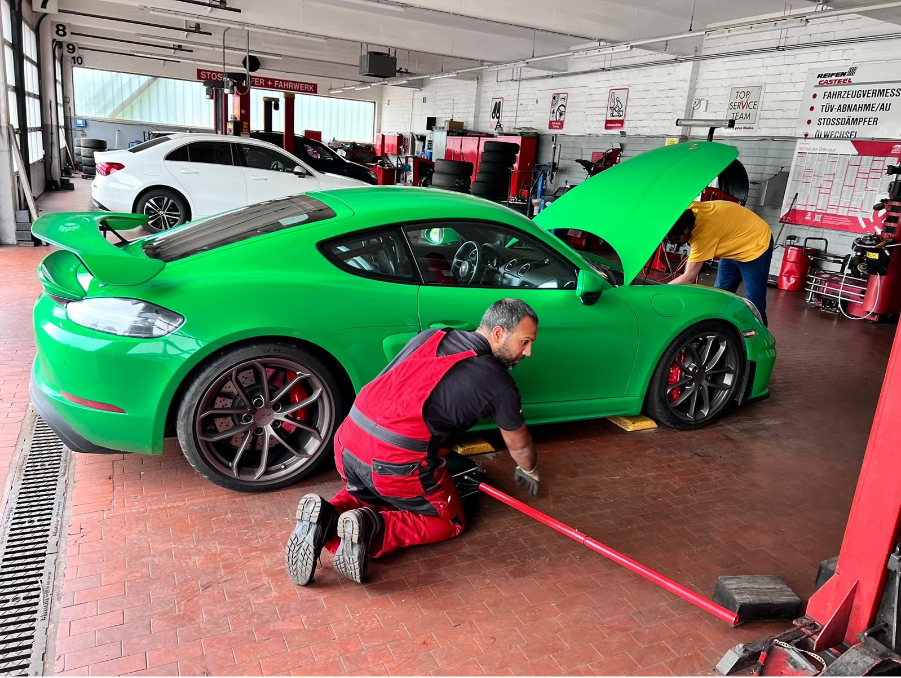
It was there, pulling into the car park, that trouble struck. One of us drove over a metal plate studded with nails, the kind used to hold joists together, destroying a rear tyre on a Porsche 718 GT4. This is a tricky size to source on short notice.
Instead of setting off on our roadtrip, the morning of day 1 turned into a frantic search through garages and suppliers, the clock ticking and the road trip momentarily on hold before it had even begun. The only viable solution was two brand new rear tyres. The original model was unavailable, and a matching set per axle was non negotiable. Not ideal, but it meant we could continue.
With fresh rubber and stress levels back to normal, we finally hit the road, the Ardennes opening up ahead of us in every shade of green. Rolling hills folded into dense forest, the road rising and falling with them, sweeping bends strung together with barely a straight in sight and hardly another car to share them with. This was the kind of tarmac that punishes a heavy hand and rewards a smooth one, and after the morning we'd had, that discipline was exactly what we needed.
The bends kept flowing as the hills began to flatten, and somewhere in that transition we crossed into Luxembourg without quite noticing the border. What we did notice was the road surface, suddenly smoother, the cambers cut with more precision, as if someone had gone over every corner with a spirit level. There was no need to chase speed here, which suited us fine, since Luxembourg's police are well known for waiting with laser guns just around the bend. The roads are good enough to enjoy well within the limit, closing one bend just as the next one opens.
Then came France, and with it a change of character. The forests thinned into open fields and gentle hills, and the roads of Lorraine turned quieter still, half forgotten stretches with nothing to distract from the sound of the engines and the miles ahead.
By late afternoon the Vosges rose up in front of us, and the driving sharpened with the terrain. The air cooled, the corners tightened, and the road began to climb and twist in earnest through pine forest, the scent drifting in through open windows on every downshift. One last run of bends brought us down into La Petite-Pierre, in the Saverne area, exactly where we needed to be.
Our day ended at Logis Hôtel Aux Trois Roses, an 18th century building once fortified by Vauban and once the family home of the father of journalist Louise Weiss, turned into a hotel by the current owner's family in 1919 and still run by their descendants today. A warm welcome, a well earned dinner, and stories of the day's adventures.
Route facts: Eupen area, Belgium to La Petite-Pierre (Saverne area), France · 392 km · Ardennes, Luxembourg, Lorraine, Vosges
Day 2: The Heart of Alsace
Morning light filtered through the trees as we left La Petite-Pierre behind, the cool air carrying the scent of pine and damp earth as we wound deeper into the Vosges. This is a mountain range built for drivers, not just for scenery. The gradients are gentle enough that you can carry real speed through the trees, the forest opens and closes around the road so you're never on the same kind of corner twice, and the surfaces are consistently good enough that you can actually trust what the car is telling you.
The first stop was Dabo, the road carving through the forest before the Rocher de Dabo, a huge sandstone outcrop, rose up above the trees. Worth a look, but the real reason to come this way is what happens next: a run of smooth, tight curves down towards La Petite-Pierre's own château, cobbled streets and timber framed houses framing one of the most satisfying sequences of the morning.
From there we picked up the Alsace Wine Route, and the character of the drive changed completely. It's not about outright pace here, the road threads through vineyard rows and small villages, rising and dipping with the terrain, every crest revealing another postcard scene. These roads reward relaxed driving, so you can actually take in the scenery, with long sightlines and easy sweepers between the villages.
Before Mulhouse we took on the Col du Bonhomme, a mountain pass at 949 metres linking Alsace and Lorraine, and this is where the driving got serious again. Long sections through dense pine forest build your speed and confidence, then the road tightens into a series of switchbacks right as the valley opens up below, so you're managing a demanding piece of road and taking in the scenery at the same time.
Then Mulhouse, and the Cité de l'Automobile.
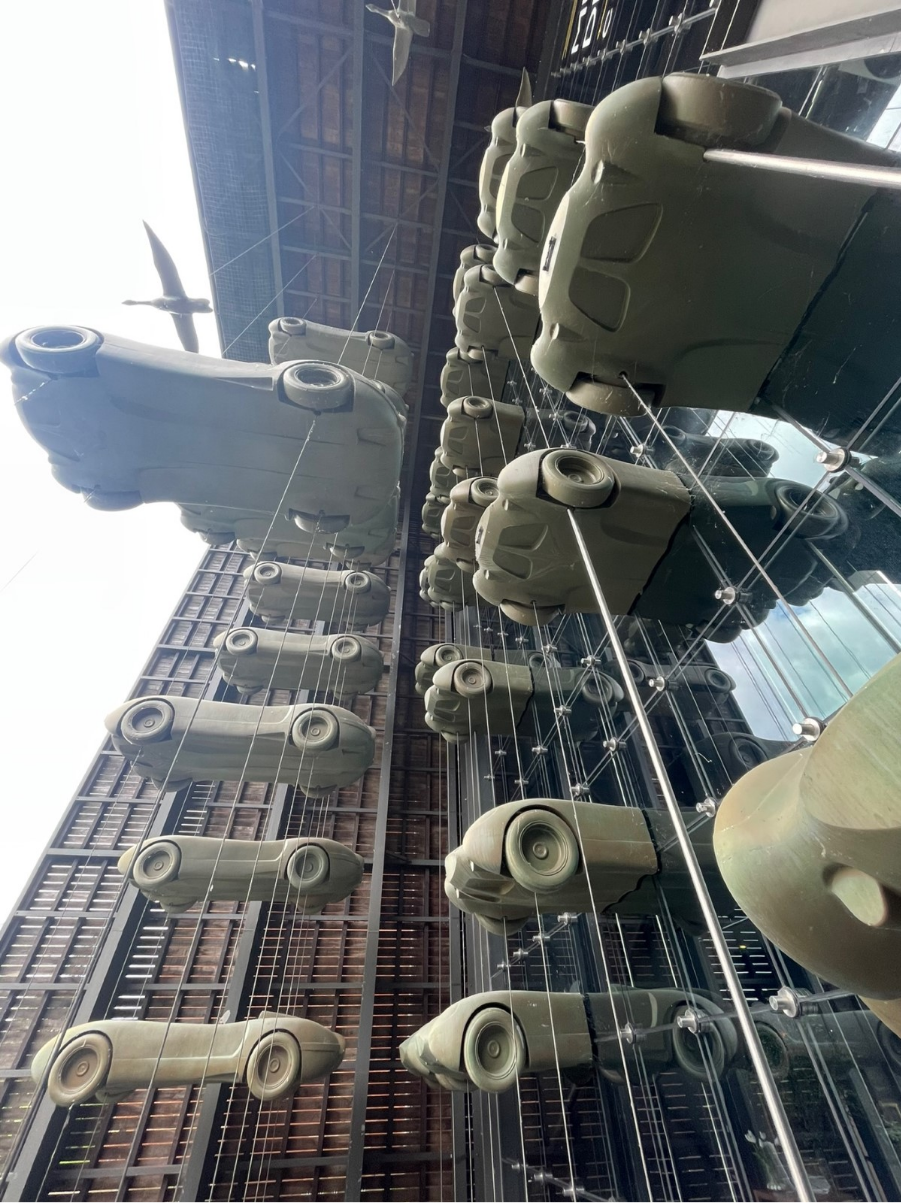
On paper it's a museum. In reality it's the closest thing the driving world has to a shrine, and it exists purely because two textile magnates, the Schlumpf brothers, spent four decades secretly buying up some of the most significant cars ever built. Over five hundred vehicles sit under one roof, more than a hundred of them Bugattis, including two of only six Type 41 Royales ever made. It is, without argument, the largest and most important Bugatti collection on earth. The story behind it is almost as good as the cars: the brothers built their empire on wool, funnelled the profits into an obsession nobody knew the scale of, and eventually went bankrupt trying to sustain it, fleeing to Switzerland while French workers, owed months of wages, broke into the factory and discovered the hoard by accident. What might have been scrapped or scattered became, by court order, a protected national collection that can never leave France. Walking those halls, past a Bugatti Type 35 that started the whole obsession and a Royale that has never been given a price, you understand instantly why this stop earns its place on any drivers' road trip through Alsace.
As the sun dipped lower, we left Mulhouse and let the roads guide us through the fading light. The final stretch was pure Alsace, vineyards bathed in golden hues, sleepy hamlets where the smell of woodsmoke drifted in the air.
Hôtel Jenny, tucked between Hagenthal-le-Bas and the Swiss border, welcomed us at the end of the journey, though dinner plans had to change, fully booked for a wedding. No matter. A quick reroute led us to the Basel Country Club, where an excellent meal, slightly underdressed but entirely satisfied, wrapped up the day.
Route facts: La Petite-Pierre to Hagenthal-le-Bas, France · 327 km · Vosges, Alsace Wine Route, Col du Bonhomme, Mulhouse
Day 3: Jura's Hidden Gems
The morning broke in Les Pontins, the stillness of the Jura only interrupted by engines firing up after a solid night at Hôtel Jenny. We started the day the Swiss way, fresh bread, cheese, local meats, and for those who wanted the full experience, a Rösti or Birchermüesli.
Leaving Les Pontins, the road carried us into Delémont, medieval architecture giving way to lively streets, then further into Corban, where the roads open up and let you find a rhythm. This is Jura driving at its purest, rolling hills, quiet farmsteads, and almost no traffic to interrupt you.
The Jura kept unfolding through Balsthal, the old castle standing watch over the valley, and on to Moutier, where rocky outcrops and dense forest start to close in on the road. From there we pushed on through Monible, the kind of stretch where you can just settle into the car and enjoy having the road to yourself.
Then the Pierre-Pertuis Pass, originally a Roman trade route, where the mountains open up and the road settles into an easy, unhurried rhythm, corner after corner doing the work for you.
The real highlight of the day, though, was the Chasseral Pass. The road climbs hard through thick pine forest, tight enough to keep your full attention, then bursts out into panoramas that stretch across the whole horizon. On a clear day the Alps are visible in the distance, and that combination of demanding tarmac followed by a wide open summit is exactly what makes a mountain pass worth driving rather than just visiting.
By afternoon we reached La Chaux-de-Fonds, the birthplace of Swiss watchmaking, and made time for the Musée International d'Horlogerie. It holds the largest collection in the world dedicated to the history of measuring time, more than ten thousand pieces, built entirely underground beneath the city's Parc des Musées. Watches, clocks, marine chronometers, tools going back centuries, all of it in a town that still runs on the precision it's famous for.
The evening drive carried us to Logis Hôtel Les Arobiers in Lamoura, right on a thoroughfare, its location less than ideal, but we didn't need much beyond a place to rest before the next day. And rest we did, after a hearty meal blending French and Swiss traditions, raclette, fondue, perhaps a game dish or freshly caught fish from the region. Over cold local beers, we ran through the day's best corners and the moments that made it unforgettable.
Tomorrow, the Alps awaited. And with them, an entirely different kind of challenge.
Route facts: Hagenthal-le-Bas, France to Lamoura, France · 374 km · Jura, Delémont, Chasseral Pass, La Chaux-de-Fonds
Day 4: Into the Alps
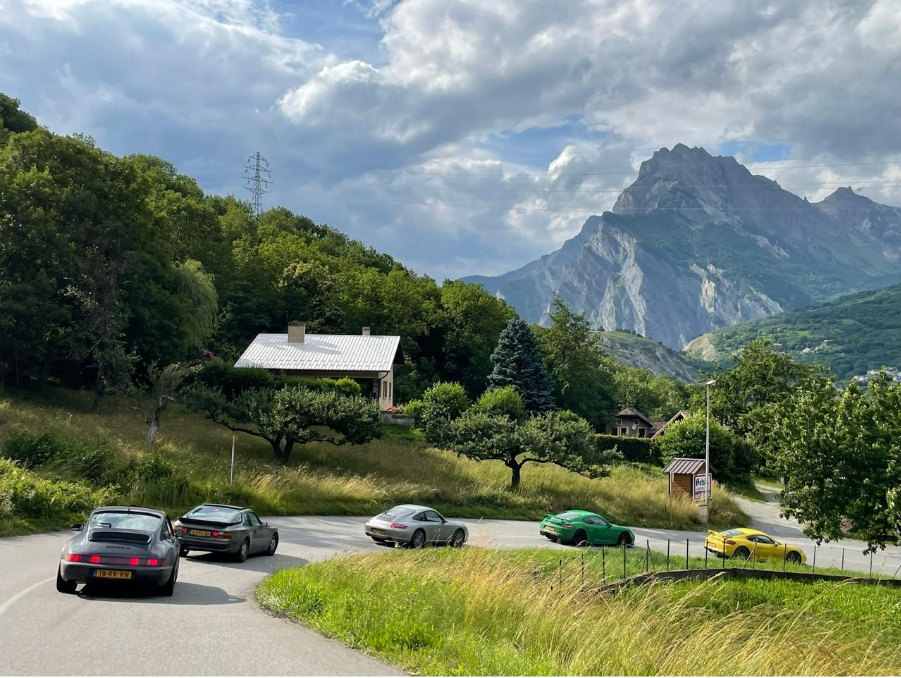
The morning light crept over Lamoura as we set off from Logis Hôtel Les Arobiers. A hearty breakfast fuelled us for what lay ahead, our first true Alpine day. The Jura was behind us. The high mountains awaited.
The roads began climbing early towards Chézery-Forens, a peaceful mountain village where the air turns crisp and the valley drops away below you. Soon after, the climb steepened into the Col de Menthières at 1,127 metres, a quiet pass but a proper introduction to Alpine driving, tighter corners, more elevation change per kilometre, and a real sense that the road is working for its view rather than just passing through.
Past the rolling hills of Pougny, the terrain sharpened further, softer countryside giving way to steeper inclines and dramatic peaks. Cruseilles made a good lunch stop, but the best roads were still ahead, so we didn't linger.
The climb to Thorens-Glières brought us to the Plateau des Glières at 1,445 metres, a wide open plateau with a serious wartime history as a key site of the French Resistance. Worth the stop for that alone, but the road up is also a lesson in patience, rewarding a measured pace that lets you read each corner rather than attack it.
The descent into Magland felt like a different world. Rock faces rose higher, the road tightened, and by the time we reached Passy the scale of the Alps had properly sunk in, with Mont Blanc looming over everything.
Crossing into Switzerland, we followed the road to Trient before tackling the Col de la Forclaz at 1,527 metres, a genuinely breathtaking final pass. Every switchback opens onto another angle of the Rhône Valley and the Trient Glacier below, and it's one of those climbs where you find yourself slowing down not because the road demands it, but because the view does. We descended into Italy as the sun dropped behind the peaks, finishing the day in Aosta.
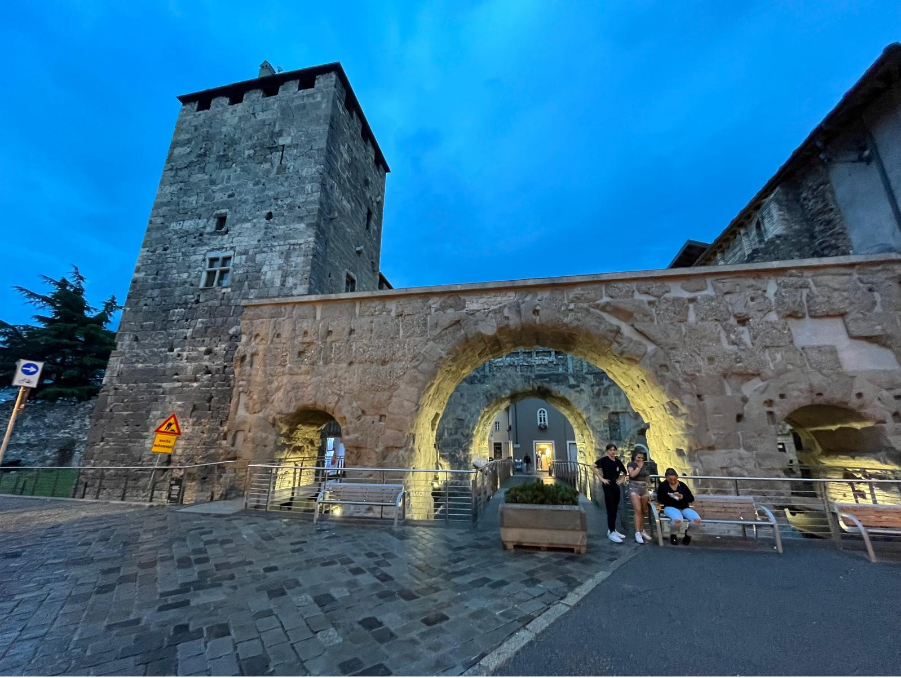
We stayed at the OMAMA Hotel, striking and unusual inside, though there was no dinner service that night. It hardly mattered, Aosta's old centre had plenty on offer, and wandering its historic streets we found Osteria dell'Oca. Best pizzas of our lives, gourmet pizza was a new concept to us, and it was executed perfectly. A day where every turn, every summit, and every meal left a mark.
Route facts: Lamoura, France to Aosta, Italy · 332 km · Col de Menthières, Plateau des Glières, Col de la Forclaz
Day 5: Alpine Adventures
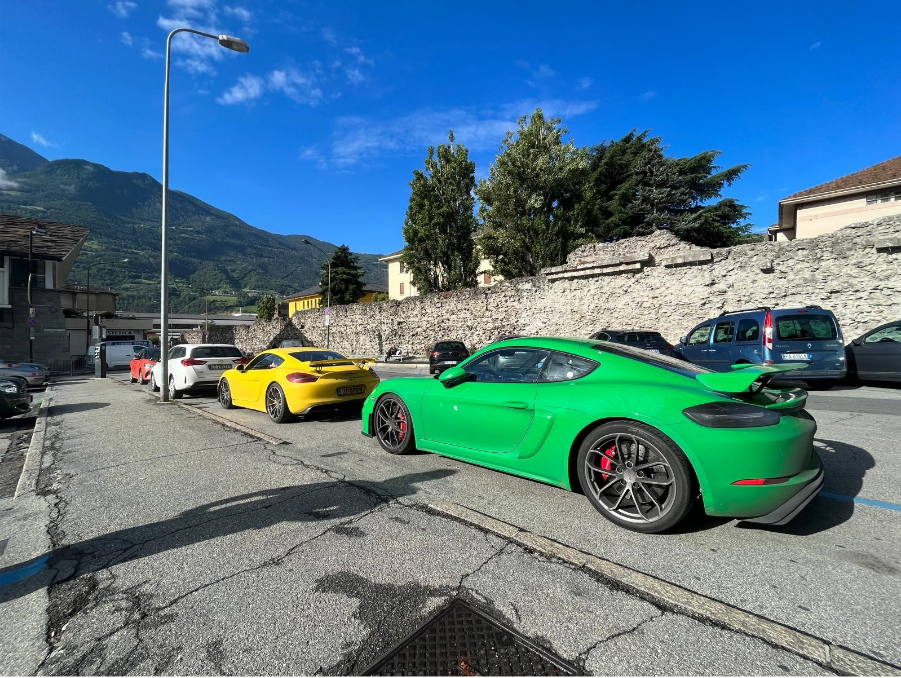
We began the day at 9:30am in Aosta, Italy, after a hearty breakfast, and set off towards Morgex ready for a day packed with legendary mountain passes.
Our first real climb was the Colle San Carlo, at 1,951 metres. The gradient is kind enough here that you can carry good speed through the trees, and the lush greenery either side keeps the whole climb visually interesting rather than just a grind upward.
Next came the Col du Petit Saint-Bernard at 2,188 metres, a historic pass used since Roman times, marking the border between Italy and France. We paused for the view before descending into Savoie.
From there to Val-Cenis and the Col du Mont-Cenis at 2,083 metres, sweeping views over towering peaks and shimmering lakes, on a wide road that lets you settle into a steady cruise rather than hunt for a line.
We continued to Briançon, crossing the Col de Montgenèvre at 1,860 metres, renowned as a major historical Alpine crossing linking France and Italy, with charming villages either side making the approach as enjoyable as the pass itself.
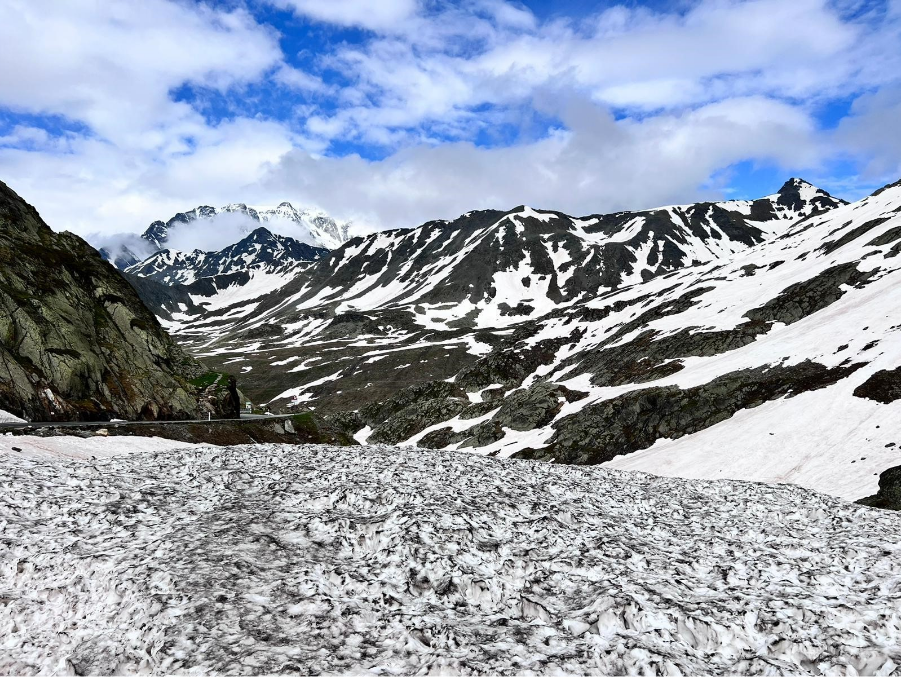
Then the big one: the Col du Galibier, at 2,642 metres, one of the highest Alpine passes there is. The climb is properly demanding, switchback after switchback, and it takes real concentration to get the rhythm right. Standing at the summit, you're on ground that's decided Tour de France legends, and the view earns every one of those turns.
We carried on over the Col du Télégraphe at 1,566 metres, splendid views over the Maurienne Valley on well maintained roads, a good stretch to simply enjoy after the intensity of the Galibier.
The final pass of the day was the Col de la Croix-de-Fer at 2,067 metres, a genuinely rugged, untamed piece of driving, the road meandering through terrain that feels properly remote.
As the day wound down we arrived at Les Cèdres, Hôtel - Restaurants - Spa in Saint-Sorlin-d'Arves, the highest village on the Col de la Croix de Fer itself, with the Aiguilles d'Arves and the Étendard glacier rising right behind it. Views over the Alps from the hotel made for a perfect end to the day. Over a well earned dinner of traditional raclette, we reflected on the tight hairpins, sweeping descents, and driving moments that made it one of the most exhilarating days of the trip.
Route facts: Aosta, Italy to Saint-Sorlin-d'Arves, France · 356 km · Col du Petit Saint-Bernard, Col du Mont-Cenis, Col du Galibier, Col de la Croix-de-Fer
Day 6: Vercors Expedition
As the morning sun cast a golden glow, we fired up the engines at Les Cèdres, Hôtel - Restaurants - Spa in Saint-Sorlin-d'Arves, anticipating the day's adventures. After a hearty breakfast, our Porsches roared to life, eager for the mountain roads ahead.
The day started with smooth, winding roads through picturesque valleys, an easy warm up before the terrain got serious. The scenery gradually turned more rugged as we passed through charming towns, each with its own flavour of local life.
Ascending towards the Col de Menée at 1,402 metres, the real driving began, sharp switchbacks stacked close together with barely a straight between them. It's the kind of climb where concentration and reward arrive together, the valley opening up below just as the road demands the most from you.
Descending into the valley, we passed through country known for vineyards and Roman history, appreciating the blend of the two as we continued.
Our route then led us to the Col de Rousset at 1,254 metres, a pass built around a series of tunnels and sharp bends. It's an unusual driving experience, since the tunnels change the character of the road completely from one bend to the next, one moment dark and enclosed, the next thrown back out into open panoramic views over the Vercors plateau.
Deeper into the Vercors Massif, known for its dramatic limestone cliffs, we found roads that are a genuine driver's paradise, flowing curves the whole way through. We took a detour to see the Gorges de la Bourne near La Chapelle-en-Vercors, a 24km road carved into the cliff face and rated three stars in the Michelin guide, one of the most scenic stretches in the whole region.
Our journey continued over the Col de la Machine at 1,011 metres, a pass renowned for its roads winding right along the cliff edge, delivering some of the most memorable views of the entire trip.
Heading towards Chambéry, we tackled the Col de Porte at 1,326 metres, known for its ski resorts in winter and lush greenery in summer, with steep climbs and a variety of tight bends providing a fitting finish to the mountain stretch of the day.
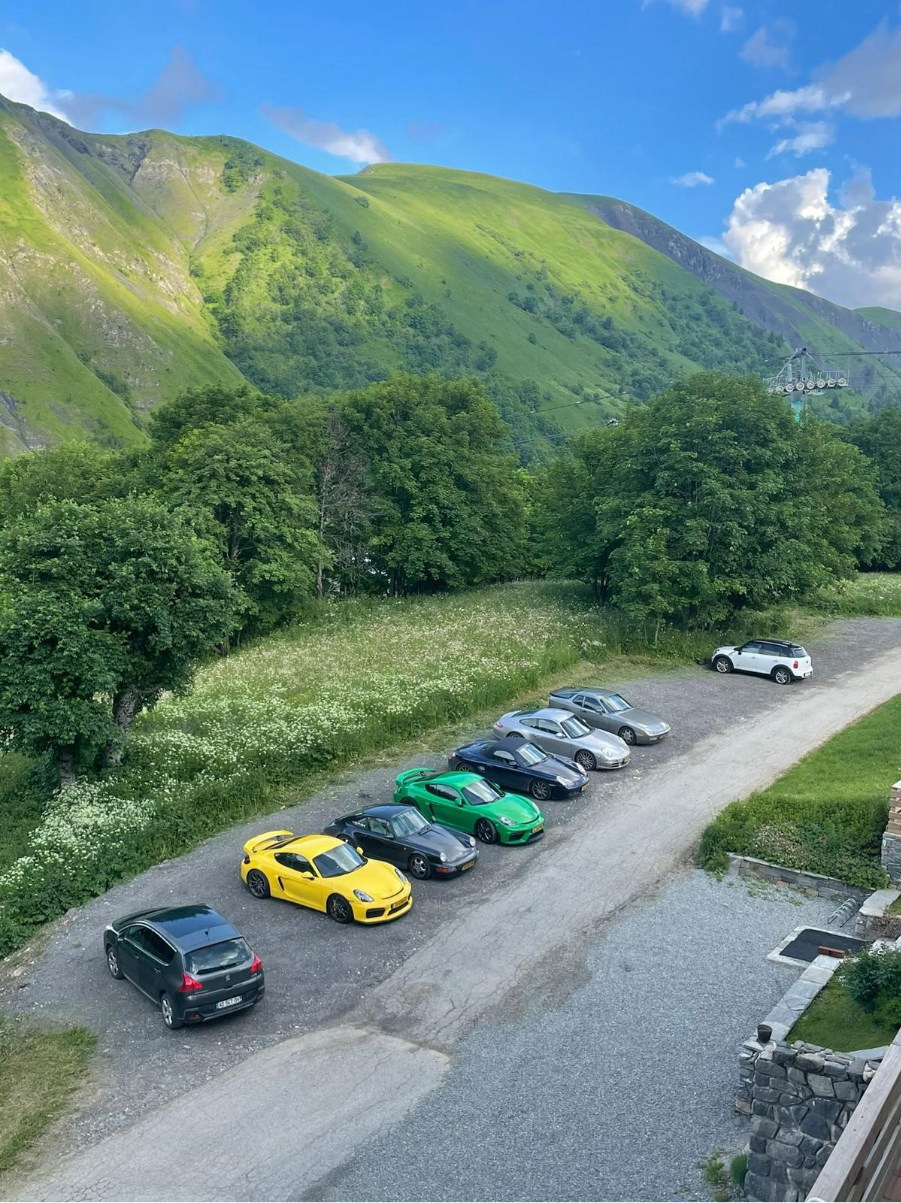
Our destination for the night, though, was further on: Hôtel-Restaurant Bois Joly, in Crozet, at the foot of the Jura and a short run from Geneva. The place was pumping with energy, and dinner on the terrace was excellent, with views out over the Lake Geneva basin and Mont Blanc in the distance. However, getting there came with a final, unexpected challenge, the last few kilometres were littered with speed bumps our cars did not appreciate.
As we parked for the night, we looked back on a day filled with exhilarating drives, breathtaking landscapes, and the camaraderie of the road. The Vercors had delivered. And tomorrow, another chapter of our epic road trip awaited.
Route facts: Saint-Sorlin-d'Arves, France to Crozet, France · 334 km · Col de Menée, Col de Rousset, Vercors Massif, Col de la Machine, Col de Porte
Day 7: The Jura and Vosges Expedition
The day began crisp and clear as we fired up the Porsches outside Hôtel-Restaurant Bois Joly. After a hearty breakfast, we were eager to tackle the winding roads and mountain passes ahead.
Our route led us through the Jura, dense forest and quiet valleys, each bend opening onto a new view and setting the tone for the day.
Our first notable stop was the Cascades du Hérisson, a run of seven waterfalls along a 3.7 km stretch of the Hérisson River. The walk out and back is roughly 7.4 km with 250 metres of climbing, a proper legs stretch after hours in the car and a good excuse to get some fresh air before the next stretch of driving.
Continuing on, the roads climbed into sharper switchbacks and steeper gradients, the kind of terrain where you need to commit to a line early and trust the car to hold it. We passed through villages like Chiprey, where the pace of life seems to have simply stopped, tranquil valleys giving a calm backdrop between the more technical sections.
A highlight of the day was the Col de la Schlucht at 1,139 metres, linking Lorraine and Alsace and a regular feature of the Tour de France. It's a pass that rewards a smooth, patient approach rather than an aggressive one, the ascent opening into wide views over the Vosges as you climb.
Deeper into the Vosges, the roads kept testing us, lush forest and glistening streams on either side, the sense of being properly out in nature growing with every kilometre.
The final leg brought us onto the Route des Vins d'Alsace, where we could finally sit back and let the drive wind down. We arrived at Hotel Restaurant Au Riesling in Zellenberg, on the wine route between Ribeauvillé and Riquewihr, with vineyard views from the terrace. The atmosphere felt a little odd, clearly not our regular crowd. This was a more sophisticated, buttoned up set, and we were a bunch of unshaven blokes who'd been living in Porsches for a week. But the beds were comfortable and the food was good. Over dinner we went back over the drives, the scenery, and the camaraderie that had carried us through another demanding, rewarding day.
Route facts: Crozet, France to Zellenberg, France · 320+ km recorded (final stretch not fully logged) · Jura, Cascades du Hérisson, Col de la Schlucht, Alsace Wine Route
Day 8: The Last Drive Through Alsace
The morning air was crisp as we started the engines in Zellenberg, surrounded by the rolling vineyards of the Route des Vins d'Alsace. After a final Alsatian breakfast, we were ready for the road ahead.
We began with a smooth cruise north along the wine route, sun drenched vineyards and historic villages sliding past in the early light, the road ours alone before the rest of the world had woken up.
As we pushed on, the scenery shifted, vineyards giving way to dense forest, the road starting to twist and climb again. Every bend revealed something new, golden fields, dark woodland, the occasional distant peak, one last reminder of why we'd come this way in the first place.
The pace stayed relaxed here, the last chance to enjoy Alsace's charm before the open Autobahn and the long run home took over.
From there the B-roads faded into fast, flowing tarmac, and the character of the drive changed completely. The roads straightened, the landscape opened up, and we let the cars stretch their legs properly for the first time in a week.
By the time we reached Wallhalben, the road had given us one last gift, a quiet moment to reflect on the days behind us. At Landgrafen-Mühle, a historic mill turned hotel with its own quiet garden terrace, we celebrated the trip in proper road trip fashion, with stories running long into the night, plenty of bullying over who'd picked which car, and surprisingly good pizza. The perfect way to close an unforgettable adventure.
The next morning, we pointed the cars towards home and took to the Autobahn, the drive carrying us back north until we were within a few kilometres of where it had all started eight days earlier.
The trip was over. But the roads? They never really end.
Route facts: Zellenberg, France to near Eupen, Belgium (via Wallhalben, Germany) · 520 km recorded across both legs · Alsace Wine Route, Wallhalben, Autobahn home