Epic Roadtrip 2023 – Der Epische Roadtrip
Introduction
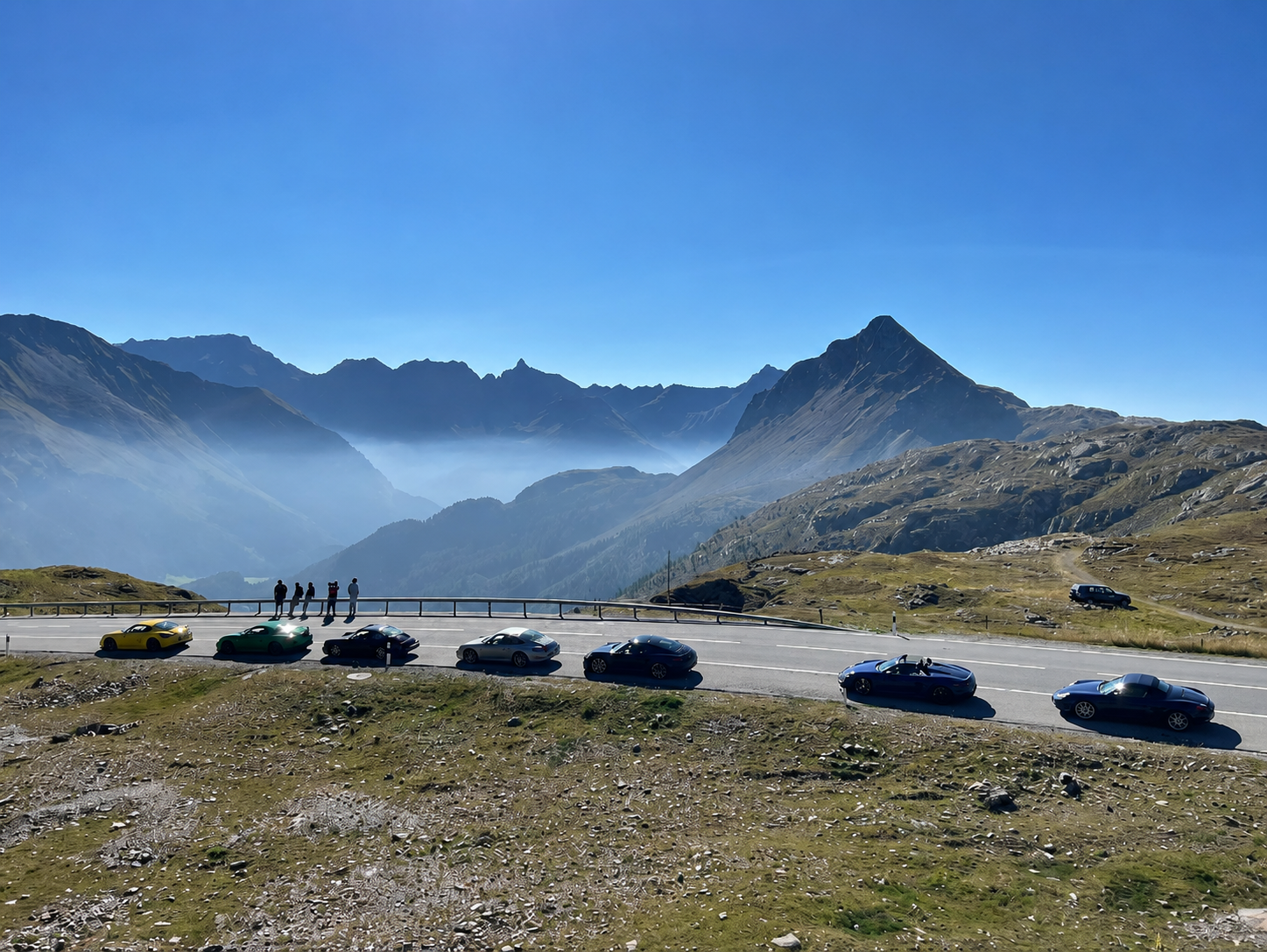
After an unforgettable 2022 through France, this year's trip set its sights further east: Austria, Switzerland, Germany, and a small dip into Italy. No motorways where we could help it, a route built around specific passes we'd wanted to drive for years, and this time we also tried to cram in as many automotive museums as we possibly could along the way.
Day 1: From Stuttgart to the Black Forest
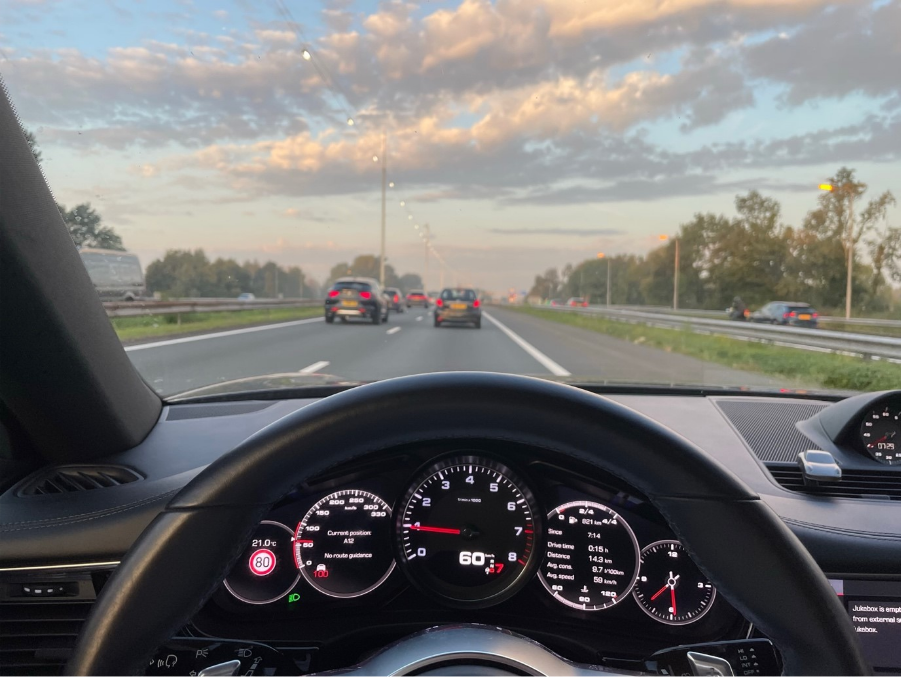
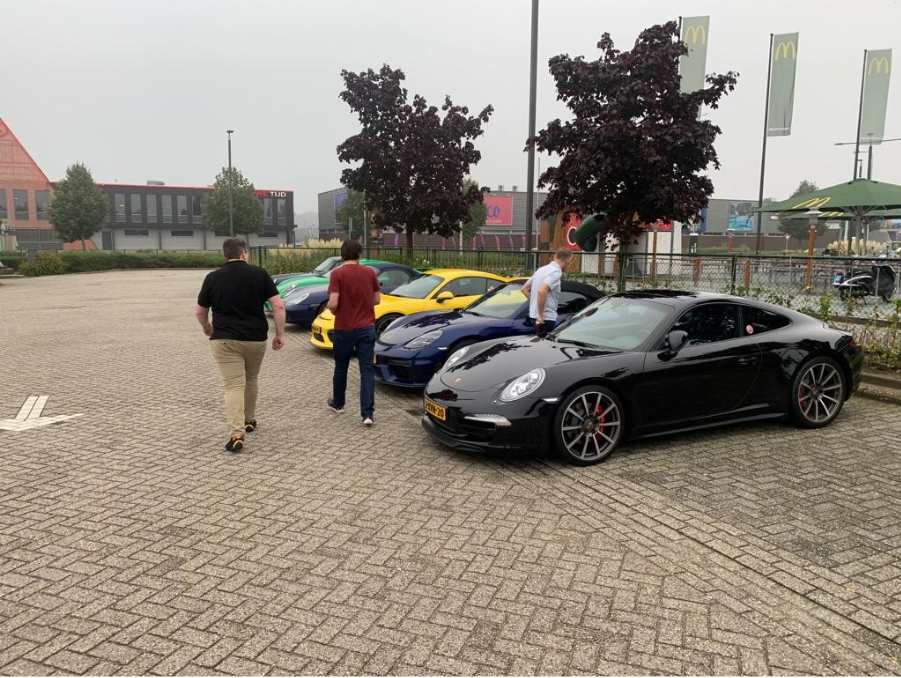
We gathered at 07:00 at a fuel station stop in Duiven, the Netherlands, breakfast, coffee, and the usual nonsense before a road trip. By 08:00 we were fuelling up again just over the German border at the Star Tankstelle on Beeker Straße in Emmerich am Rhein, oil levels checked and windscreens cleaned, before the run down to Stuttgart properly began.
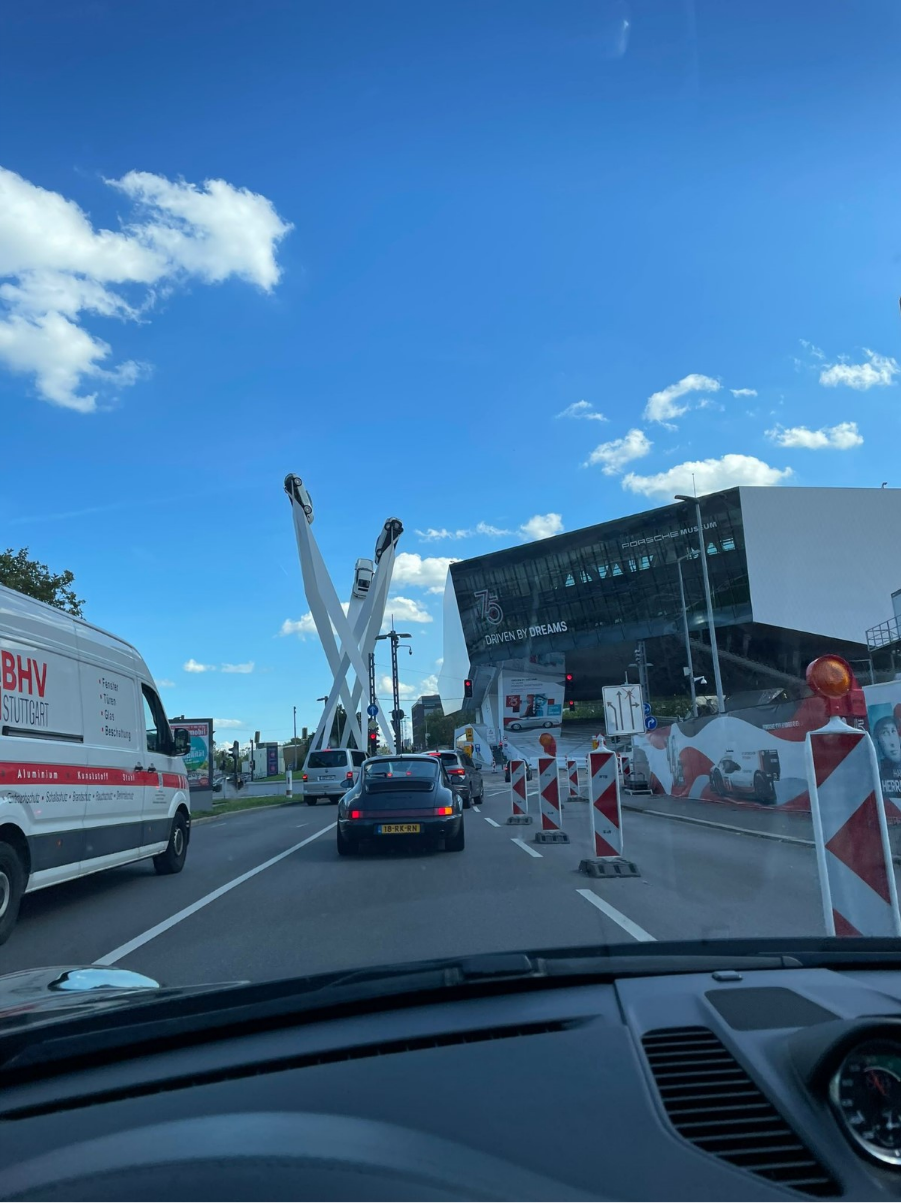
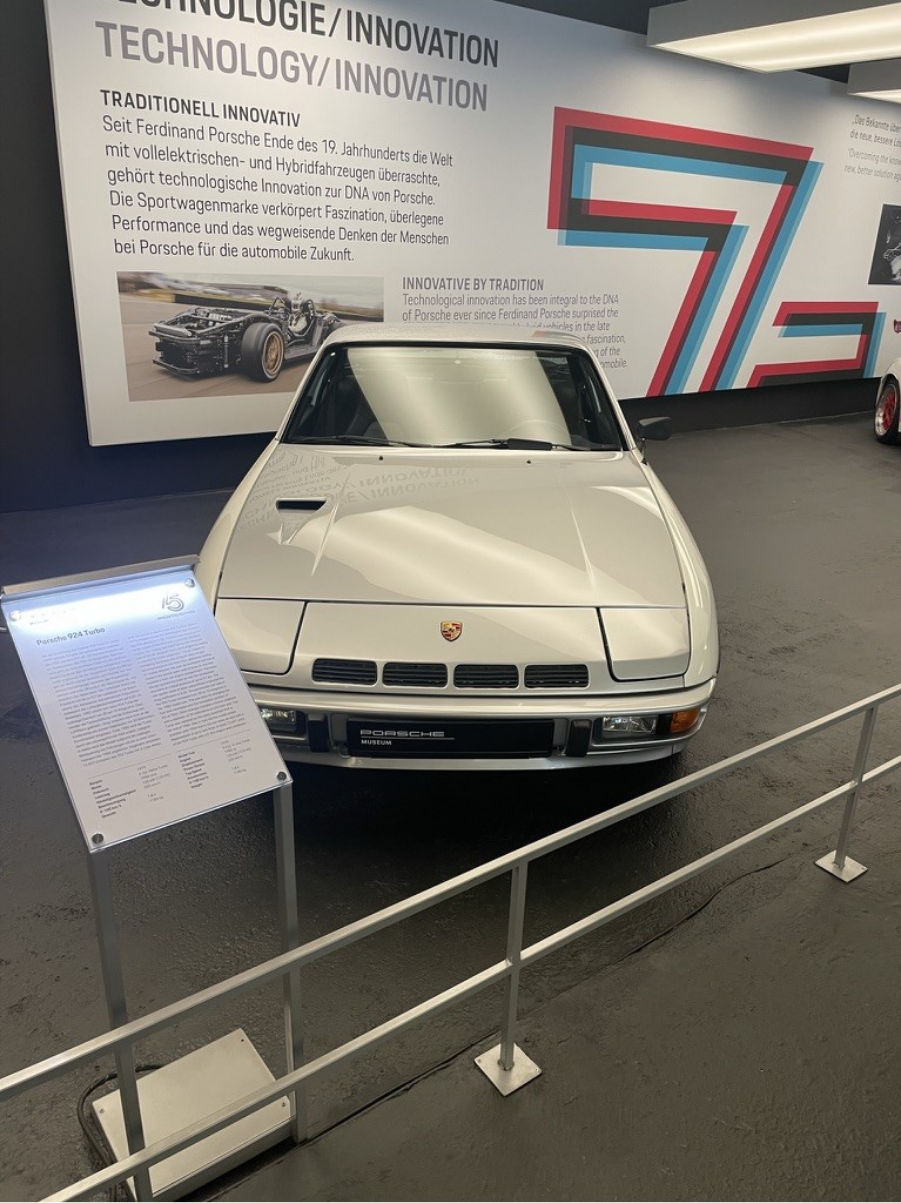
From Emmerich we blasted down the Autobahn to Stuttgart, our first proper stop the Porsche Museum. The exhibition rotates constantly, so it's always worth dropping in even if it's just for an hour, and even that hour is well spent finishing with a Boxster burger or a currywurst at Boxenstopp, the museum's own restaurant, where half the menu is named after the cars themselves.
Once everyone had had their fill, we left the motorways behind and started picking the back roads instead, past Calw and Neuenbürg, onto the B294 through Pforzheim, Bad Wildbad, and Enzklösterle, before climbing onto the Schwarzwaldhochstraße, the B500, at Kaltenbronn.
We took a small but worthwhile detour to the Allerheiligen Waterfalls near Oppenau, seven cascading steps dropping a total of 83 metres through the Black Forest, the ruins of All Saints' Abbey adding a historical touch alongside them. Brief but rewarding, and a peaceful contrast before the final stretch of the day.
As night fell, we arrived at Hotel Löwenherz, the guesthouse within the EOS Tagungszentrum Allerheiligen complex, sat in a genuinely serene valley beside the ruins of the old abbey, which was the whole draw of the place. We very quickly realised this was a place built around mindfulness, and our noisy arrival, engines still warm, doors slamming, was very much frowned upon. There was no dinner service either. The abbey ruins themselves, crumbling stone under towering trees in the last of the light, made up for it. So did a good outdoor restaurant in a nearby town, decent food and a relaxed atmosphere, the right way to close out an intense first day.
Route facts: Duiven, Netherlands to Allerheiligen, Germany · 505 km Duiven to Stuttgart (per roadbook, not in GPX) + 156 km Stuttgart to Allerheiligen recorded · Porsche Museum, Allerheiligen Waterfalls
Day 2: A Day of Mountain Passes and Swiss Serenity
Departing from Allerheiligen, we continued south through the final stretches of the Black Forest, past Villingen-Schwenningen, before crossing into Switzerland near Schaffhausen. From there the route ran through Winterthur and into the Toggenburg, away from the main roads and straight into a run of passes that defined the whole day.
The first was the Hulfteggpass at 954 metres, an eight kilometre stretch between the cantons of St Gallen and Zurich, well surfaced and open pretty much year round, an easy, confidence building way to start. From there the road looped back down through Nesslau before climbing again towards Einsiedeln, home to one of Europe's most important Benedictine monasteries and the reason the Satteleggpass existed as a route in the first place, a pilgrim path over the mountain long before it was ever paved for cars. At 1,190 metres it's noticeably tighter than the Hulftegg, more corners packed into less distance, before dropping towards Rothenthurm and the Sattelpass at 932 metres, in use since the 13th century as an approach to the Gotthard and paved as a proper road in 1860. Three passes, three completely different characters, and barely another car on any of them.
The roads eased into peaceful Swiss valleys as the day wound down, rugged terrain giving way to smoother tarmac and meadows dotted with small villages, before the final run south towards Isenthal, a village of barely 500 people tucked between Lake Lucerne and the Urirotstock massif itself, the 2,928 metre peak the hotel takes its name from. Hotel Urirotstock has been family run for over 20 years, wooden floors, a garden terrace looking straight up at the mountain, and a kitchen turning out proper Swiss plates rather than anything trying too hard. Isenthal also happens to sit a few kilometres from the Rütli Meadow, the field where the Swiss confederacy was founded in 1291, not a bad place to end a day spent on roads that predate the country itself.
Route facts: Allerheiligen, Germany to Isenthal, Switzerland · 358 km · Hulfteggpass, Satteleggpass, Sattelpass
Day 3: Across the High Alps with Legendary Passes and Glacial Beauty
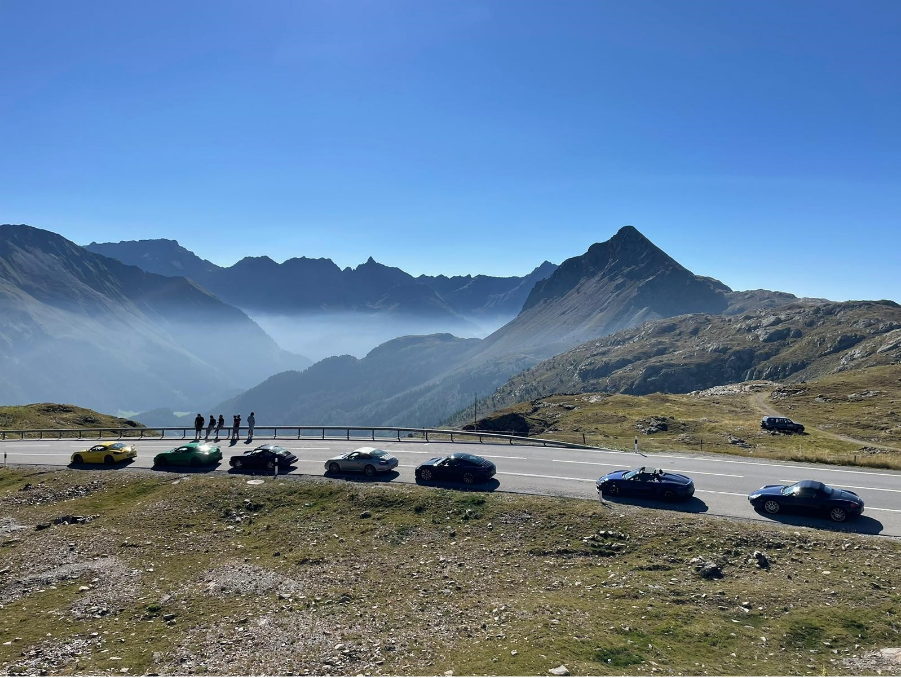
Departing from Hotel Urirotstock, the route immediately climbed into the heart of Switzerland's most celebrated mountain roads, five passes in one day, each one a name that means something to anyone who cares about driving.
First was the Sustenpass at 2,264 metres, one of the "Big 3" alongside Grimsel and Furka. Opened in 1946, it was the first pass road in the Alps purpose built for cars rather than adapted from an old mule track, 25 bridges and 25 tunnels carrying the road along the edge of the Stein Glacier. It rolls almost directly into the Grimselpass at 2,164 metres, the Grimselstrasse, 38 kilometres of reservoir lakes and rock that's been a route through these mountains since Roman times.
Then the Furkapass, the road we'd already driven once from the other side, past Hotel Belvédère again where a quick lunch broke up the climb. From Furka it was on to the Gotthardpass at 2,106 metres, the most important north south crossing in the Alps and the reason three separate tunnels have all been dug beneath it over the past 140 years: the original rail tunnel in 1882, the road tunnel in 1980, and the Gotthard Base Tunnel in 2016, still the longest rail tunnel in the world. As a finishing move, the San Bernardino Pass at 2,065 metres, a route used since Roman times and opened to wheeled traffic in 1770, known historically as the Italian Road.
The final stretch brought us down to Hotel Reich just outside Thusis, right at the mouth of the Viamala gorge, the "bad road" the Romans already complained about, cliffs rising up to 300 metres on either side and the old mule track still visible cut into the rock face. Driving past it in the last light of the day, roughly the way traders and Alpine pass travellers have approached Thusis for two thousand years, made for one of the more dramatic run ins to a hotel car park of the whole trip.
Route facts: Isenthal, Switzerland to Thusis, Switzerland · 315 km · Sustenpass, Grimselpass, Furkapass, Gotthardpass, San Bernardino Pass
Day 4: Through Switzerland's Alpine Giants
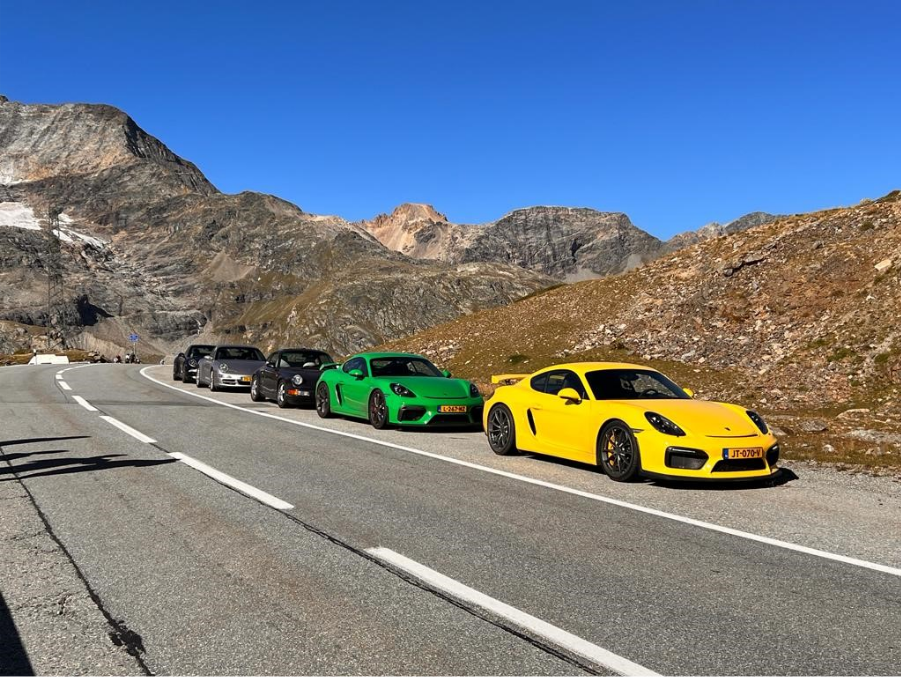
Departing from Hotel Reich, the day began with a run deeper into the Alps, first the Albula Pass at 2,306 metres, paved since 1865 and one of only three routes connecting the Engadin with the northern Grisons, then the Bernina Pass at 2,328 metres, the road running alongside the famous Bernina Express railway for stretches of the climb.
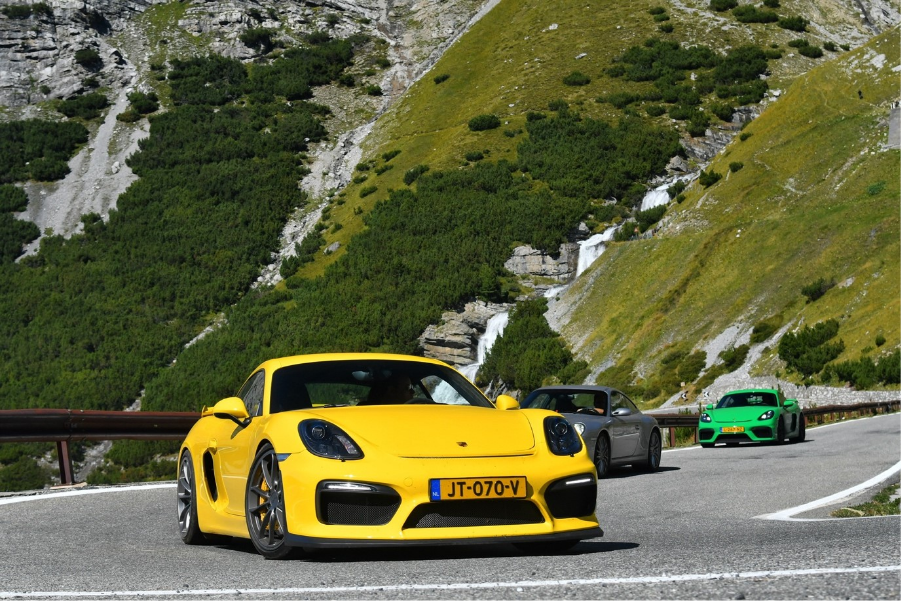
From there into Italy for the Stelvio Pass, 2,757 metres and 48 hairpins stacked so tightly near the summit you can see four or five of them at once from the right angle. Built between 1820 and 1825 as an Austrian military supply road, it took five years of hand labour to carve out of the mountain, and we drove it both ways, up from Bormio and back down, because once wasn't enough.
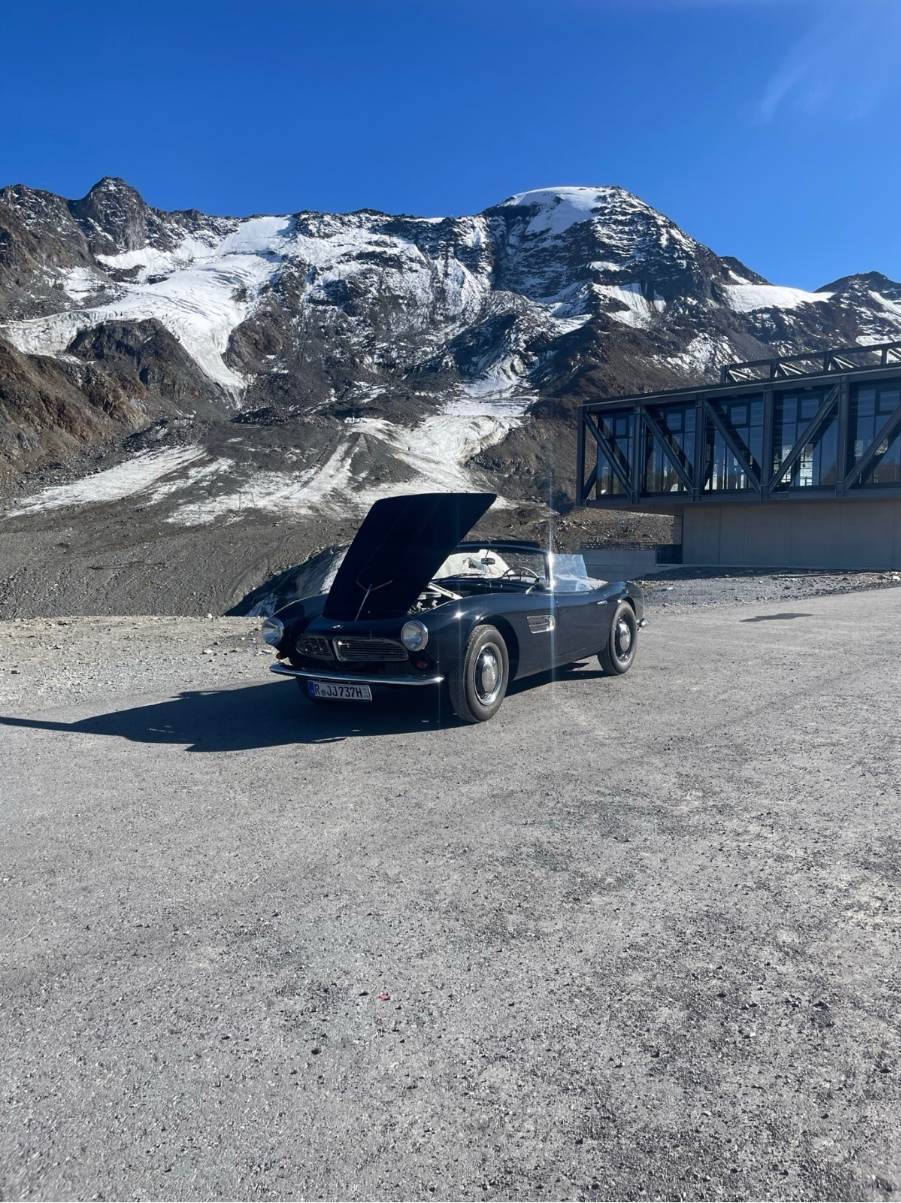
Back into Austria via the Reschenpass, 22 kilometres past Lake Reschen, where a 14th century bell tower still rises out of the water, all that's left of a village drowned when the valley was dammed for hydroelectric power in 1950. Then to Kaunertal, and the Kaunertal Glacier Road, 26 kilometres and 29 hairpins climbing 1,500 metres to 2,750 metres, a toll road built in 1980 through the Kaunergrat Nature Park that's sometimes called the most beautiful dead end in the Alps. Not the most technical drive of the trip, but my favourite road of all time. It genuinely is a dead end too, no loop, no other way out, so our hotel sitting right at the foot of it meant we drove it twice whether we wanted to or not. At the summit car park, entirely unplanned, sat a BMW 507, one of only 252 ever built. If you plan to drive this road, near the top there's an ice tunnel cut about forty metres into the glacier itself, open to visitors. We had o idea it existed and missed it entirely, so look it up before you go.
We finished at Hotel Weisseespitze, in the hamlet of Platz at the foot of the glacier road, known locally as one of the more genuinely motorcycle and driver friendly hotels in the Alps.
Route facts: Thusis, Switzerland to Kaunertal, Austria · 326 km · Albula Pass, Bernina Pass, Stelvio Pass, Reschenpass, Kaunertal Glacier Road
Day 5: Through the High Alps and Over Timmelsjoch
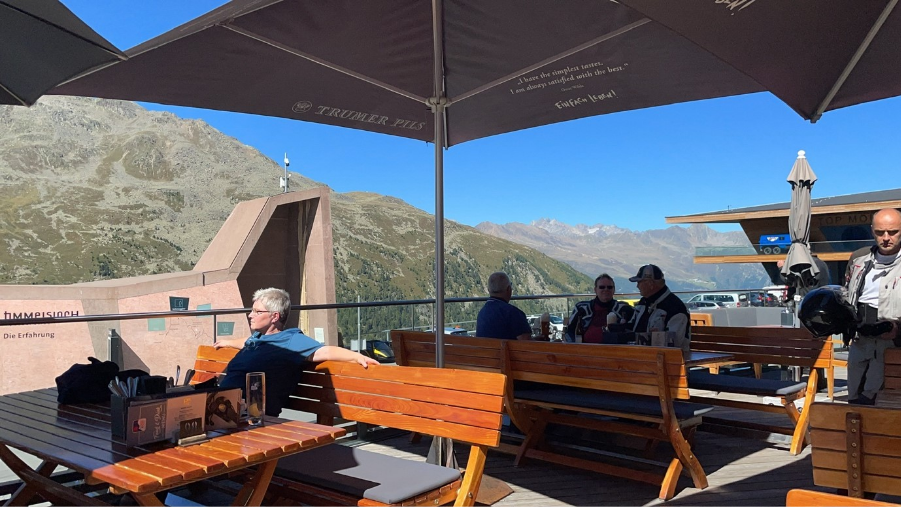
Departing from Kaunertal, we picked up the Timmelsjoch, the highest border crossing between Austria and Italy at 2,509 metres and the highest unglaciated crossing between the Reschen and Brenner passes. Thirty two kilometres and around 30 switchbacks from the Ötztal side alone, and the climb is deceptively gentle for how high it takes you, right up until the final stretch when the road narrows and the switchbacks start stacking properly. The national border itself is almost an anticlimax, no barrier, no customs post, just two small posts in the ground and a plaque set into the tarmac, easy to miss if you're not looking for it. What you can't miss is the Pass Museum, a concrete monolith that literally cantilevers 16 metres out over the Italian side, built specifically to straddle the border it's named for.
The Timmelsjoch is a privately maintained road, snow clearance up here is a serious undertaking, so a toll applies, and right at that toll station sits the Top Mountain Motorcycle Museum, Europe's highest at 2,175 metres. The version we walked through wasn't the original. On the night of 17 January 2021 the entire timber framed building burned to the ground, an electrical fault in a display screen the likely cause, and by the time crews reached it there was nothing left to save. Around 350 motorcycles were lost, some owned by the founding brothers themselves, others on loan from collectors around the world, roughly 23 million euros of irreplaceable machines gone in a single night. Rather than fold, the brothers rebuilt the entire thing from scratch in ten months, reopening that November with over 580 motorcycles across 150 years of history. A strange but genuinely worthwhile detour on a driving trip, and a good excuse to warm up before the summit.
From the top we dropped south into Italy, then picked up the Jaufenpass, known locally as Passo di Monte Giovo, at 2,094 metres, the northernmost pass in the Alps entirely within Italy, a favourite pairing with the Timmelsjoch among riders and drivers for good reason, roughly 20 hairpins on a road that's clearly built for exactly this kind of day.
We finished at Hotel Auren in San Giovanni, in the Ahrntal, right on the edge of a small copse beside the Aurino river. The evening turned into something out of Fawlty Towers, a mumbling owner who seemed permanently bewildered and a waiter whose incompetence bordered on theatrical. We couldn't stop laughing, easily one of the more entertaining nights of the whole trip.
Route facts: Kaunertal, Austria to San Giovanni in Val Aurina, Italy · 284 km · Timmelsjoch, Top Mountain Motorcycle Museum, Jaufenpass
Day 6: Conquering the Grossglockner High Alpine Road
Leaving Hotel Auren behind, we had to backtrack south a little first, having ended the previous day on what was effectively a dead end. The road out took us past Percha, where we stopped for a short walk to see the earth pyramids, strange clay pillars up to 30 metres tall, each one capped by a boulder that's protected the softer earth beneath it from thousands of years of rain since the last Ice Age. Worth the twenty minutes on foot for something that genuinely looks like nothing else in the Alps.
Getting out of Italy and into Austria meant the Staller Sattel, a pass so narrow on the Italian side that it only runs one direction at a time, controlled by traffic lights in fifteen minute windows each hour. We timed it wrong and had to wait, which turned out to be no bad thing, plenty of time to take in the Antholz valley before our slot opened up.
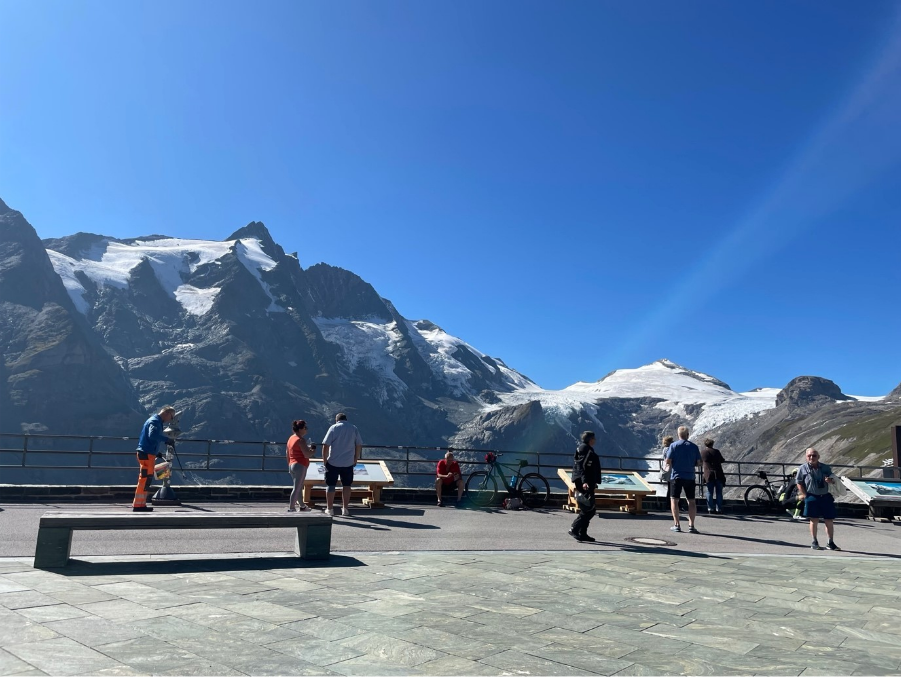
From there northeast into Austria and the Grossglockner Hochalpenstraße, Austria's highest paved road and one of the great driving roads of Europe, 48 kilometres and 36 hairpins climbing to the Hochtor at 2,504 metres through the Hohe Tauern National Park. It opened in 1935, built as a depression era jobs programme, and it shows in the best way, this is a road built properly, wide sweeping bends giving way to tighter switchbacks as the mountain closes in, snow still lying at the roadside in September.
At Kaiser-Franz-Josefs-Höhe, at the far end of the pass, sits the highest car and motorcycle exhibition in the world, over a thousand square metres of it, with a model car cabinet running 23 metres, the longest in Europe. In 2023 it was running a special Porsche exhibition, Driven by Dreams, marking 75 years of the marque, and seeing that kind of history laid out this high in the Alps, glaciers visible through the windows, made the stop feel like more than just another museum.
We finished the day at Hotel Residenz Hochalm in Saalbach-Hinterglemm, ski in ski out and thoroughly modern, industrial style interiors that felt like a proper contrast to the rustic mountain setting outside. We didn't have time to stop, but Vötter's Oldtimer Museum is right near Kaprun on the way, over 200 exhibits from the 1950s to the 1970s including, somewhat improbably, the world's largest convertible and a full steam locomotive. Worth building in more time for if you're doing this route yourself.
Route facts: San Giovanni in Val Aurina, Italy to Saalbach-Hinterglemm, Austria · 263 km · Earth pyramids, Staller Sattel, Grossglockner Hochalpenstraße, Kaiser-Franz-Josefs-Höhe, Vötter's Oldtimer Museum
Day 7: Across the Bavarian Alps
Departing from Saalbach-Hinterglemm, the first stop of the day was the Hans Peter Porsche TraumWerk in Anger, a genuinely strange sort of museum, essentially a rich man's toy collection made public. Hans Peter Porsche is Ferdinand Porsche's grandson, and the place holds Europe's largest private collection of tin toys open to the public, around 2,100 pieces dating back to 1860, alongside his own Porsche road cars and the largest private model railway in the world, 340 square metres of it, 190 trains running through a full day and night cycle across replica German, Austrian, and Swiss landscapes. Odd, but genuinely worth the stop.
From there we picked up a stretch of the Deutsche Alpenstraße, Germany's oldest holiday route, 450 kilometres end to end tracing the Bavarian Alps along the Austrian border, though we only needed a slice of it before turning towards Munich.
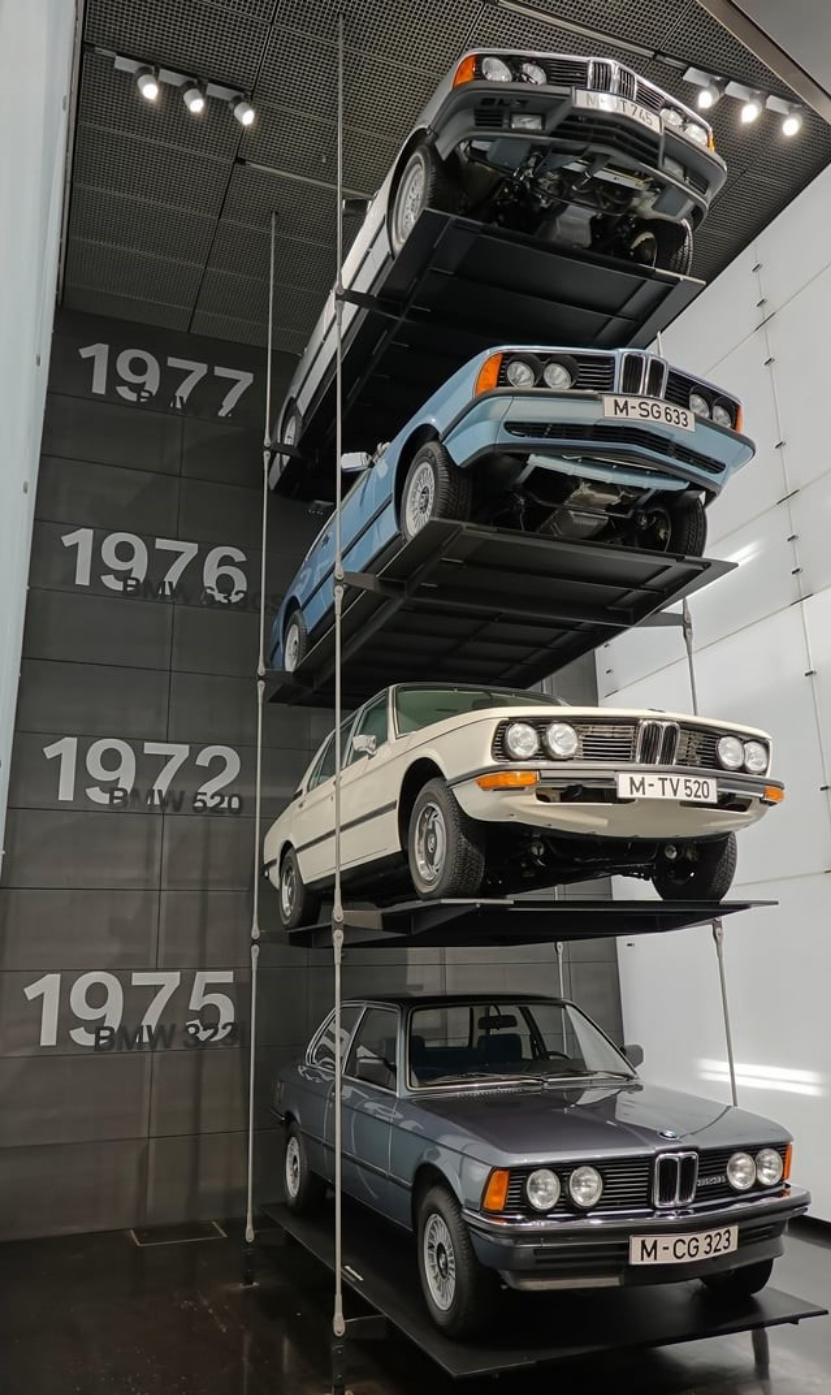
The day's last stop was the BMW Museum in Munich, housed in the distinctive bowl shaped building next to BMW Welt, opened in 1973 and doubled in size during a major renovation completed in 2008. Around 125 exhibits spanning more than a century of the marque, cars, motorcycles, and engines laid out across 4,000 square metres, a proper way to close out a trip that had been built around cars from the very first day.
We finished at Landhotel Gasthof Huber in Merching, family run since 1914, great beer and even better schnitzels, exactly the kind of night the trip deserved before the final stretch home.
Route facts: Saalbach-Hinterglemm, Austria to Merching, Germany · 336 km · Hans Peter Porsche TraumWerk, Deutsche Alpenstraße, BMW Museum
Day 8: The Final Leg Home
The last day began with one more museum, the Mazda Classic Automobil Museum Frey in Augsburg, the only Mazda museum outside Japan. Walter Frey started collecting almost by accident, buying a Cosmo Sport in New Jersey in 1980, and it grew into 120 vehicles covering every model Mazda has built since the 1930s, housed in a beautifully restored 1897 tram depot with 45 to 60 on show at any one time. Rotary engines get the spotlight, cars most of us had never even heard of, let alone seen in the metal.
From Augsburg it was a long push north to Dortmund for one last stop, the Pace Automobil Museum, founded by tuner Jean Pierre Kraemer and opened in 2022 inside a former Citroën and Nissan dealership on the Westfalendamm. Four floors, mostly cars on loan from the manufacturers themselves, Porsche, BMW, Audi, Mercedes, and a rotating display that means it's never quite the same museum twice. A proper way to end a trip that had been built around cars from the very first morning at the Porsche Museum.
From there it was the Autobahns all the way, a fuel stop in Emmerich am Rhein, the same Star Tankstelle where the whole thing had started, before the final short run home to Duiven.
The trip was over. But the roads? They never really end.
Route facts: Merching, Germany to Emmerich am Rhein/Duiven, Netherlands · 716 km · Mazda Classic Automobil Museum Frey, Pace Automobil Museum